
The biggest difference comes down to the source of your misery: strep throat is a specific bacterial infection, while most sore throats are caused by viruses. This is a critical distinction because a bacterial infection like strep demands antibiotics, but a viral sore throat absolutely does not. Knowing the signs can help you get the right care, right away.
Identifying the Culprit Behind Your Throat Pain
When you feel that awful scratchiness or a sharp pain every time you swallow, it’s easy to jump to conclusions. While both conditions give you a sore throat, their causes, symptoms, and treatments couldn’t be more different. Strep throat is caused by the Group A Streptococcus bacteria and can lead to some pretty serious complications if you just ignore it. On the other hand, most sore throats are viral and will clear up on their own with a little rest and supportive care.
Sore throats are incredibly common, responsible for around 20 million doctor visits in the U.S. each year. But here’s the kicker: since the vast majority (70-85%) are viral, antibiotics are often prescribed when they shouldn't be, which contributes to the growing problem of antibiotic resistance. This is exactly why getting an accurate diagnosis is so important—it ensures you get treatment that actually works without taking unnecessary medication. You can read the full research about sore throat treatment guidelines to understand why this matters so much.
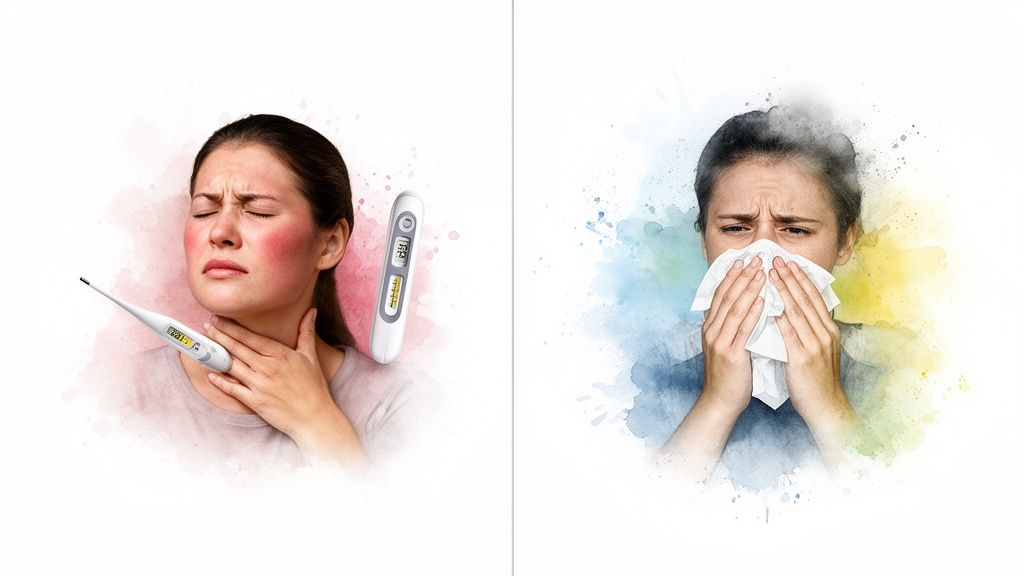
Strep Throat vs Viral Sore Throat at a Glance
Sometimes the easiest way to see the difference is to compare the symptoms side-by-side. Use this table as a quick reference to spot the tell-tale signs of what you might be dealing with.
| Symptom | Typical Strep Throat (Bacterial) | Typical Sore Throat (Viral) |
|---|---|---|
| Onset | Sudden and severe | Gradual and scratchy |
| Cough | Almost always absent | Often present with a runny nose |
| Fever | Common, often 101°F (38.3°C) or higher | Low-grade or no fever |
| Tonsils | Red, swollen, often with white spots or streaks of pus | May be red and swollen but usually without white spots |
| Other Symptoms | Headache, nausea, body aches, sometimes a sandpaper-like rash | Runny nose, sneezing, hoarseness, watery eyes |
| Lymph Nodes | Swollen and tender lymph nodes in the front of the neck | Mild swelling of lymph nodes |
This quick overview shows that while both are painful, the company they keep gives you major clues. The absence of a cough combined with a high fever and those nasty white spots on your tonsils should be a huge red flag for strep, making a medical evaluation essential.
Comparing the Key Symptoms in Detail
While a quick checklist is a good start, the real clues are in the story of how your illness unfolds. Understanding the subtle differences in how symptoms show up and progress is the key to telling strep throat apart from a common viral sore throat. A bacterial infection like strep doesn't build up over a few days; it hits you like a ton of bricks.
Picture this: you wake up feeling fine, but by lunchtime, swallowing feels like you’re gulping down shards of glass. This is the classic signature of strep throat—a rapid, aggressive onset of severe throat pain. It’s not a minor scratchiness; it's an intense pain that can make even sipping water a miserable experience.
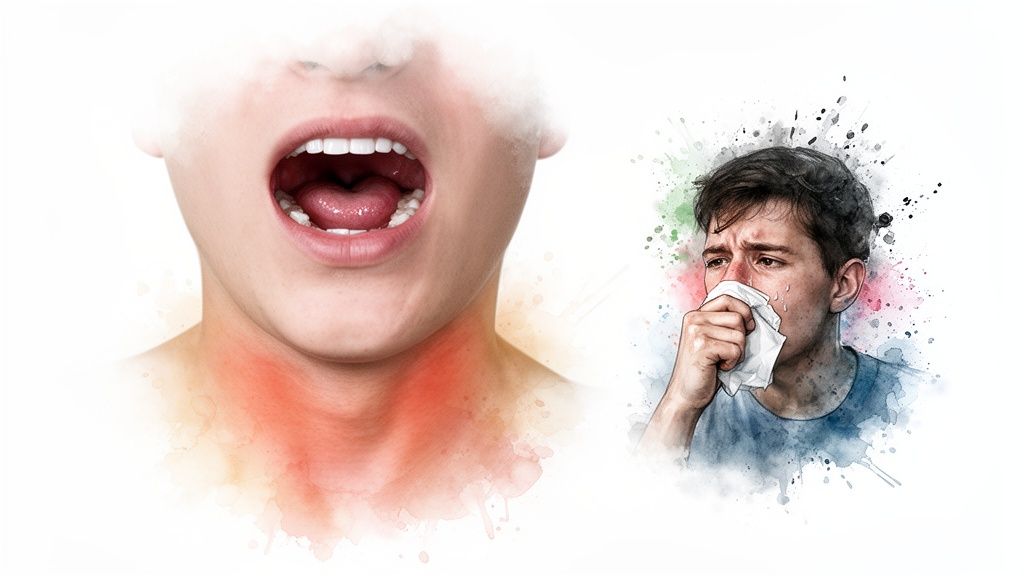
Unpacking the Strep Throat Symptom Profile
Beyond that sudden, sharp pain, strep throat brings a very specific crew of symptoms along with it. A high fever, often spiking to 101°F (38.3°C) or more, is a dead giveaway. This is a world away from the low-grade temperature you might get with a simple cold.
Other tell-tale signs of strep include:
- Swollen, Tender Lymph Nodes: You’ll likely feel painful lumps on the front of your neck as your immune system wages war on the bacteria.
- Visible Signs on the Tonsils: A quick look in the mirror might reveal bright red, swollen tonsils, often covered with ugly white patches or streaks of pus.
- Petechiae on the Palate: Some people even get tiny, red spots on the roof of their mouth (the soft or hard palate).
- Associated Symptoms: A headache, body aches, and sometimes nausea or a stomachache (especially in kids) are common sidekicks to strep.
One of the most reliable ways to differentiate between strep and a viral sore throat is by noticing what’s missing.
A cough is a very rare guest at the strep throat party. If your sore throat comes with a nagging cough and a stuffy nose, the odds are overwhelmingly in favor of a virus, not strep.
The Viral Sore Throat Experience
In stark contrast, a viral sore throat usually makes a much slower, more gradual entrance. It often starts as a mild, scratchy feeling that gets worse over a day or two. Instead of the "swallowing glass" sensation of strep, it might feel more like sandpaper is lining your throat.
This kind of sore throat rarely flies solo. It's almost always part of a bigger package of cold-like symptoms. You can learn more about the usual causes and self-care for a typical sore throat to see how different they really are.
The viral symptom package usually includes one or more of these familiar miseries:
- Coughing and Sneezing: These are classic respiratory symptoms that point directly to a virus.
- Runny or Stuffy Nose: Nasal congestion is a hallmark of the common cold.
- Hoarseness: Your voice might get raspy or disappear altogether as the virus irritates your larynx.
- Watery Eyes: This is another common sign of a viral upper respiratory infection.
While a virus might give you a low-grade fever, it almost never reaches the high temperatures you see with strep. The presence of these cold symptoms—especially a cough—makes a strep diagnosis far less likely.
So, What’s Causing That Sore Throat?
At its core, the difference between a garden-variety sore throat and strep throat comes down to the tiny invader causing all the trouble. Most of the time, a sore throat is the work of a virus. Common culprits include the rhinovirus (which gives you the common cold), influenza, and adenovirus. These viruses are everywhere and spread like wildfire, which is why a sore throat often shows up with other classic cold symptoms.
Strep throat, on the other hand, is a bacterial infection. The specific bad actor is Group A Streptococcus (GAS) bacteria. This isn't just a technical detail; it's the most important thing to know in the "strep throat vs. sore throat" debate. Why? Because unlike a virus that just has to run its course, we can actively fight and kill this bacteria with antibiotics. This simple fact completely changes the game when it comes to treatment.
How Viruses Make Their Rounds
Viruses are experts at spreading from person to person. When someone with a viral illness coughs or sneezes, they spray tiny respiratory droplets loaded with the virus into the air. If you breathe those droplets in, or touch a surface where they’ve landed and then touch your face, you can get sick.
The really tricky part is that you're usually contagious a day or two before you even feel symptoms, and you can keep spreading it as long as you feel sick. This is why viral illnesses can tear through a school or an office so fast—people are often passing it around before they even know they have it.
How Strep Bacteria Spreads
Strep throat uses a similar playbook. It spreads mainly through respiratory droplets when an infected person coughs or sneezes. You can also get it through direct contact, like sharing a cup or fork with someone who has it.
Here’s the crucial takeaway: Strep throat is extremely contagious until you’ve been on antibiotics for at least 24 hours. This is a huge reason why getting a quick diagnosis and starting treatment is so important—not just for you, but for everyone around you.
The vast majority of sore throats (what doctors call acute pharyngitis) are viral. We're talking 70-85% of cases, and they get better on their own. But that leaves 15-30% of cases caused by Group A Strep, which absolutely requires medical attention. Strep throat affects hundreds of millions of people globally every year, so being able to test for it accurately is a huge deal. You can see the data behind these numbers and find more insights about Strep A pharyngitis.
Getting the diagnosis right isn't just academic—it has serious public health consequences. Handing out antibiotics for a viral infection does nothing to help and fuels the massive global problem of antibiotic resistance. A correct diagnosis ensures you get the right treatment while helping us protect these life-saving drugs for when they’re truly needed.
How Doctors Tell the Difference and What Treatment Looks Like
Because the symptoms of strep throat and a viral sore throat can look so similar, getting a professional diagnosis is the only way to know for sure. A doctor won't just guess; they use specific clinical tools and tests to figure out what’s causing your misery and get you on the right treatment plan. This isn't just important for your recovery—it's crucial for public health, too.
The process almost always starts with a clinical assessment. A doctor will ask about your symptoms and when they started, then look for key physical signs. They might even use a scoring system, like the Centor score, which gives points for specific symptoms like fever, no cough, swollen tonsils, and tender lymph nodes in your neck. A higher score makes strep look more likely.
Pinpointing the Cause with Testing
If your symptoms are really pointing toward a bacterial infection, the next step is usually a test to confirm it. This is where a clear diagnosis is made, leaving no room for doubt.
There are two main tests for this:
- Rapid Strep Test: This involves a quick swab of the back of your throat and gives results in just a few minutes. It's great at confirming you do have strep but can sometimes give a false negative.
- Throat Culture: If the rapid test comes back negative but the doctor still has a strong suspicion of strep (especially with kids), they might send a second swab to a lab. This test is the gold standard—it’s more sensitive and will catch infections the rapid test might miss. You’ll just have to wait a day or two for the results.
The whole reason for testing is simple: antibiotics are the right tool for bacterial infections like strep throat, but they do absolutely nothing against viruses. Getting an accurate diagnosis helps prevent the overuse of antibiotics, which is a major contributor to the growing problem of antibiotic resistance.
Contrasting Treatment Approaches
Once a diagnosis is locked in, the treatment paths head in completely different directions. The right approach depends entirely on whether a bacterium or a virus is the culprit. This flowchart breaks down that fundamental decision.
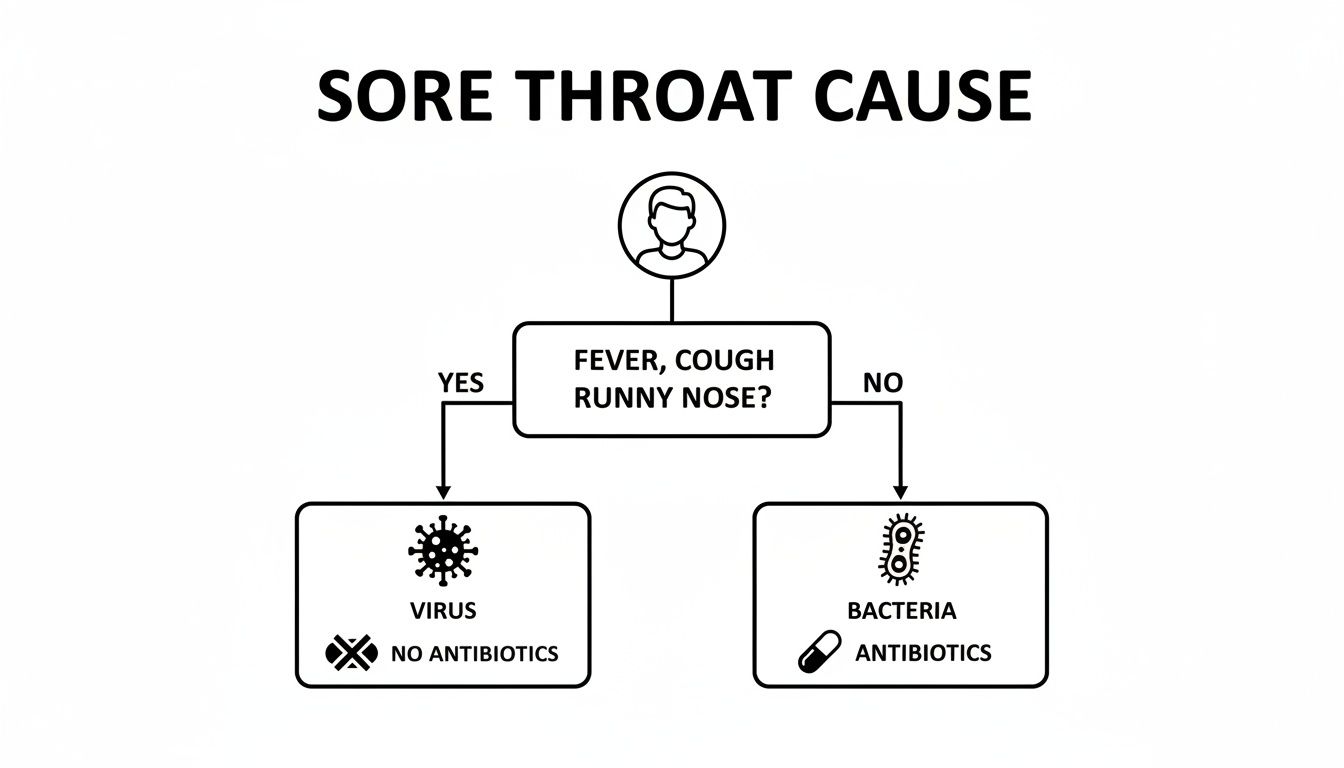
As you can see, the cause of the infection is what dictates whether antibiotics are needed, which is why a proper diagnosis is so important.
If you have a confirmed case of strep throat, your doctor will prescribe a course of antibiotics, like penicillin or amoxicillin. It is absolutely critical to finish the entire prescription, even if you start feeling a lot better after just a day or two. This ensures all the bacteria are wiped out and helps prevent some pretty serious complications down the road. You can learn more by checking out our detailed guide on getting a prescription for strep throat.
On the other hand, if your sore throat is viral, the game plan is all about supportive care to manage your symptoms while your body's immune system does the heavy lifting. This means:
- Getting as much rest as you can
- Staying hydrated with plenty of fluids like water, tea, or broth
- Using over-the-counter pain relievers like ibuprofen or acetaminophen to ease the pain and fever
- Soothing your throat with lozenges, honey, or a simple saltwater gargle
Telehealth services like ChatWithDr offer a really convenient way to handle this whole process. An online physician can assess your symptoms, figure out if a strep test is necessary, and send a prescription for antibiotics to your pharmacy if a bacterial infection is confirmed—all without you having to leave home.
The Risks of Getting the Diagnosis Wrong
Mistaking a bacterial infection for a common virus, or the other way around, isn't just an inconvenience—it's a gamble with your health. The whole debate of strep throat vs. sore throat really boils down to this: getting it wrong can lead to anything from fueling a global health crisis to facing serious, life-altering complications. This is exactly why self-diagnosing and just hoping for the best is never a good idea.
When a case of strep throat goes untreated, the Group A Streptococcus bacteria don't just pack up and leave. They can stick around and kick off severe secondary conditions that attack the heart, kidneys, and joints. This is hands-down the most dangerous outcome of a missed diagnosis.
Complications are what starkly separate strep throat from viral sore throats. Untreated Strep A can lead to acute rheumatic fever (ARF) and rheumatic heart disease (RHD).
This is a massive issue on a global scale. The World Health Organization estimates there are 470,000 new cases of ARF and over 300,000 deaths from RHD every single year. While these complications are rare in the U.S. thanks to the widespread use of antibiotics, that protection only works if the treatment is prompt and accurate. The key is starting antibiotics within nine days of the first symptoms, which can head off over 90% of potential ARF cases. You can learn more about Group A Strep surveillance and prevention.
The Dangers of Unnecessary Antibiotics
On the flip side, throwing antibiotics at a viral sore throat is just as problematic. Antibiotics are designed to kill bacteria, period. They are completely useless against viruses, so taking them for a viral illness won't help you feel better or get you back on your feet any faster.
Instead, this all-too-common mistake creates two big problems:
- Pointless Side Effects: Antibiotics often bring on unpleasant side effects like nausea, diarrhea, and an upset stomach. You’d be putting up with all that for a medication that offers zero benefit for your actual infection.
- Antibiotic Resistance: This is a major public health threat. Every time antibiotics are used when they aren't needed, bacteria get another chance to adapt and build resistance. This makes these life-saving drugs less effective for everyone down the road.
Why a Professional Diagnosis Matters
This high-stakes scenario makes it crystal clear why you need a professional medical opinion. Guessing can mean undertreating a dangerous infection or overtreating a simple virus. This is where fast, accessible care can make all the difference.
Telehealth services like ChatWithDr offer a responsible and convenient first step. An experienced physician can evaluate your symptoms from afar, figure out how likely it is you have strep, and map out the right course of action. This makes sure you get the right treatment—whether that’s a prescription for antibiotics or just solid advice on supportive care—without running the risks that come with a misdiagnosis.
When You Should Seek Medical Care for a Sore Throat
Most sore throats are just a nuisance that clears up on its own. But some are your body’s way of waving a red flag, signaling it's time to stop waiting it out and get a professional opinion. Figuring out whether you’re dealing with a minor annoyance or a bacterial infection like strep is the key to getting the right care before things get worse.
Certain symptoms are non-negotiable and demand immediate medical attention. If you or your child has difficulty breathing or swallowing, starts drooling excessively, or develops a muffled "hot potato" voice, it could point to a serious complication. The same goes for a very high fever that won’t break with over-the-counter meds, or a stiff neck combined with a headache. These aren't just signs of a sore throat; they're warning signs.
Deciding When a Consultation Is Necessary
Even if your symptoms aren't that severe, a doctor's input is still a smart move when things just aren’t getting better, especially when you're trying to tell the difference between strep throat and a run-of-the-mill sore throat. The longer it drags on without a clear cause, the more important a real diagnosis becomes.
It’s probably time to seek medical care if you’re seeing any of these signs:
- A sore throat that lasts longer than 48 hours, particularly if it’s paired with a fever. This persistence suggests your body might be up against more than a simple virus.
- Visible white spots or pus on your tonsils. This is a classic hallmark of a bacterial infection and puts strep throat high on the list of possibilities.
- A fine, red rash that feels like sandpaper shows up on the body. This could be scarlet fever, which is caused by the same bacteria that causes strep.
- The absence of a cough and other cold symptoms. When you have a wicked sore throat and fever but no runny nose or cough, the odds of it being strep go way up.
Waiting too long to deal with potential strep throat isn’t just about feeling miserable; it raises the risk of complications. Getting an accurate diagnosis is the first and most critical step toward getting the right treatment and keeping it from spreading to others.
The Modern Solution for Timely Care
Knowing when to get care is one thing, but actually getting it can be a hassle, especially for busy parents or professionals. This is exactly where a telehealth service like ChatWithDr comes in. Instead of blowing up your schedule for an in-person visit, you can get a fast, professional medical evaluation from anywhere, 24/7. Telemedicine gives you a direct path to answers.
The process is built for convenience without cutting corners on care. You just fill out a secure form detailing your symptoms. A U.S. board-certified physician reviews your case, provides a diagnosis and a personalized treatment plan, and can send a prescription to your local pharmacy if you need one—often in just a few hours. For those who need answers now, you can learn more about how online urgent care can provide a fast, reliable diagnosis.
Common Questions About Sore Throats
When your throat is on fire, you just want answers. Is it strep? Is it just a cold? Sorting through the details of strep throat vs sore throat can be confusing, but getting clear answers helps you make the right call for your health. Here are some of the most common questions we see.
Can an Online Doctor Really Diagnose Strep Throat Without a Test?
It's a fair question. While an online doctor can't physically swab your throat, they can do the next best thing. They use well-established clinical guidelines, like the Centor score, to figure out the probability of strep based on the specific symptoms you describe. If your story strongly points to a bacterial infection, they can prescribe antibiotics.
Of course, if your symptoms are in a gray area, the doctor will be upfront and recommend you head to a local clinic for a rapid test. But in many cases, that initial online chat saves you a trip and gets you on a clear treatment path right away.
How Quickly Should I Feel Better After Starting Antibiotics?
If it's truly strep throat, you should notice a significant improvement within 24 to 48 hours after your first dose of antibiotics. The fever should start to break, and that awful throat pain will begin to ease up.
It’s absolutely critical to finish the entire course of medication, even when you start feeling like yourself again. Stopping early is how you risk the infection coming back or, worse, developing serious complications. The good news is that you're generally no longer contagious after just 24 hours on antibiotics.
Pro Tip: Don't forget to toss your toothbrush and get a new one about 24–48 hours after starting your medication. It’s a simple step that so many people forget, but it’s key to avoiding reinfecting yourself.
Is Strep Throat a Kid's Thing, or Can Adults Get It Too?
Strep throat definitely loves the school-age crowd—it's most common in kids and teens between 5 and 15 years old. While it's less frequent in adults, you can absolutely still get it. Adults who are around children a lot, like parents and teachers, are naturally at a higher risk.
The symptoms are pretty much the same for adults: a sudden, severe sore throat and fever, but usually without the cough you'd expect from a viral bug.
What’s the Harm in Taking Antibiotics for a Viral Sore Throat?
Taking antibiotics for a virus isn't just ineffective—it can be actively harmful. Antibiotics are designed to kill bacteria; they have zero effect on viruses.
Here’s what can go wrong:
- Pointless Side Effects: You might end up with side effects like nausea or diarrhea from the medication, all for no actual benefit.
- Fueling Antibiotic Resistance: This is the big one. Overusing antibiotics contributes to the global problem of antibiotic resistance, making future bacterial infections much harder for everyone to treat.
This is exactly why getting a proper diagnosis before you start any medication is so important.
When you need fast, reliable answers about your sore throat, ChatWithDr gives you 24/7 access to board-certified physicians. They can assess your symptoms and have a treatment plan ready in hours. Get the right diagnosis from the comfort of your home by visiting ChatWithDr.com.