
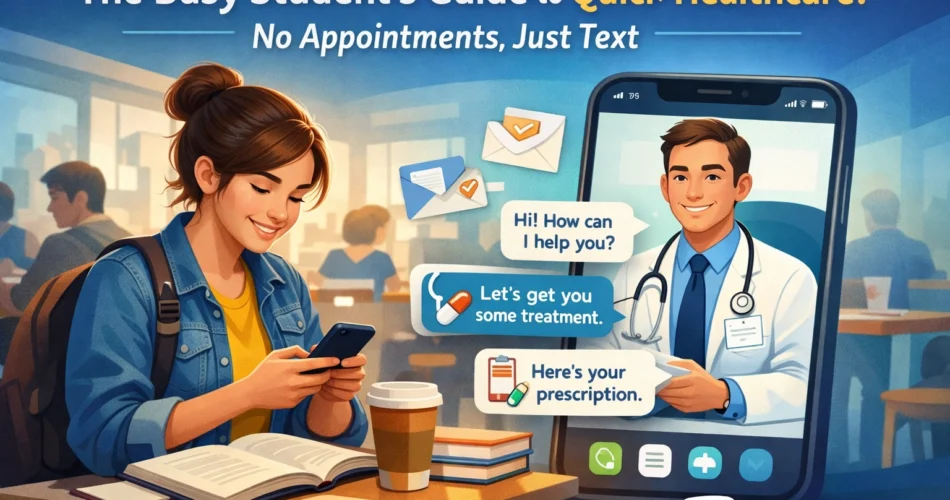
For the modern college student, time is the most valuable currency. Between back-to-back lectures, grueling late-night study sessions in the library, and the social whirl of dorm life, there is very little room for a "sick day." Unfortunately, communal living environments are breeding grounds for germs, and the high-stress environment of finals week often compromises the immune system.
When a scratchy throat or a persistent cough appears at 2:00 AM, the traditional healthcare system feels like an obstacle course. Most university health centers have limited hours and require appointments days in advance. Local urgent care clinics often involve long wait times in a room full of other sick people. For a student balancing a heavy credit load and perhaps a part-time job, spending four hours in a waiting room is simply not an option.
This is where the shift toward text-based healthcare is changing the game. By moving the medical consultation to a secure messaging platform, students can now access professional medical advice without leaving their desks or interrupting their study flow.
1. The Convenience of Text-Based Care: Why Messaging Wins
In an era where 54% of students report they don’t always read university emails, text messaging remains the most effective way to communicate. It is immediate, discreet, and fits perfectly into the lifestyle of someone who is always on the go. Text-based telehealth allows you to connect with a licensed provider via secure medical messaging, bypassing the need for video calls that require a quiet, private space: something that is hard to find in a crowded dormitory.
With ChatWithDr, the process is streamlined for maximum efficiency. There is no need to download a heavy application or navigate a complex registration portal. You can simply start a consultation from your phone.
No Appointments, No Waiting Rooms
Traditional healthcare relies on the "waiting room" model. Even with an appointment, you often find yourself sitting for thirty minutes before being called back. Text-based care eliminates this entirely. Whether you are in California or Florida, you can initiate a chat whenever symptoms arise. The turnaround is designed for the fast-paced student life, with responses typically arriving within 30 mins – 4 hrs.

2. Common Student Health Concerns Handled via Chat
College life presents a unique set of health challenges. The combination of sleep deprivation and close-quarters living makes students susceptible to a variety of acute conditions. Research from the American College Health Association suggests that respiratory infections and urinary tract infections are among the most common reasons students seek medical care.
Cold, Flu, and Strep Throat
The "dorm plague" is a real phenomenon. One person catches a cold, and within a week, the entire floor is coughing. If you suspect you have strep throat, getting a diagnosis quickly is essential to prevent the spread and start recovery. Through secure messaging, a doctor can review your symptoms and determine if a prescription is necessary.
Urinary Tract Infections (UTIs)
UTIs are common and incredibly uncomfortable, often making it impossible to focus on schoolwork. Instead of waiting for an opening at the campus clinic, students can use online urgent care to describe their symptoms and receive a treatment plan immediately.
Emergency Situations and Maintenance
Sometimes, health needs are urgent but not "emergency room" urgent. Whether you need emergency contraception or a refill on an EpiPen, having a 24/7 medical contact ensures you aren't left waiting until Monday morning.

3. Mental Health and Wellness: Beyond the Physical
The pressure of maintaining a high GPA while navigating the transition to adulthood can take a significant toll on mental health. Many university counseling centers are overwhelmed, with waitlists stretching several weeks. While text-based medical messaging is not a substitute for long-term therapy, it provides a vital touchpoint for students who need immediate guidance on managing stress-related symptoms or discussing wellness options.
Support for Weight Loss and Chronic Care
For students managing chronic conditions or looking for support with weight loss, the traditional medical model can feel judgmental or overly clinical. Text-based care offers a level of privacy and comfort that encourages students to be honest about their health goals. Because these services are often FSA/HSA eligible, students can use their pre-tax health savings to cover the costs of these consultations.
4. Financial Transparency: The $39.99 Flat Rate
One of the biggest barriers to healthcare for students is the cost. Even with student insurance, co-pays can be unpredictable, and out-of-network costs can be devastating. For many international students or those who have opted out of university plans, the fear of a massive bill keeps them from seeking help until a condition becomes severe.
ChatWithDr operates on a transparent, $39.99 flat rate per consultation. This clear pricing model is essential for students on a budget.
- No Insurance Required: You don't need to worry about whether a provider is "in-network."
- No Hidden Fees: The price you see is the price you pay for the consultation.
- No Account Needed: You don't have to commit to a monthly subscription or create a permanent account just to get one question answered.
This accessibility is particularly important for students in states like South Dakota, Vermont, or Kansas, where rural campus locations might mean the nearest specialist is hours away.

5. Navigating Life Away From Home: 24/7 Availability
For many students, college is the first time they are responsible for their own healthcare. When you're away from your family doctor, it's easy to feel lost. You might not know where the nearest pharmacy is or which over-the-counter meds are safe to mix.
24/7 Access to Licensed Professionals
Health issues don't follow a 9-to-5 schedule. A fever might spike at midnight, or a fungal infection might become unbearable on a Sunday afternoon. Having 24/7 access to a telehealth doctor means you always have a professional to turn to.
Seamless Prescription Management
If a provider determines that medication is necessary, they can send a prescription directly to a local pharmacy near your campus. Whether you need online birth control or treatment for erectile dysfunction, the process is handled with the utmost privacy.
For male students dealing with issues like hair loss, the ability to consult a professional via text removes the embarrassment that sometimes prevents young men from seeking treatment in person.

How to Get Started
If you are feeling under the weather or have a medical question that can't wait, the steps are simple:
- Visit the Website: Go to ChatWithDr.com.
- Select Your Condition: Choose from a wide range of common ailments or select a general consultation.
- Start Chatting: Provide your symptoms and details through the secure messaging interface.
- Get Your Plan: A licensed doctor will review your case and respond with a diagnosis, advice, or a prescription sent to your local pharmacy.
To make it even easier for the next time you're sick, you can check out how it works or download the ChatWithDr app.
Conclusion: Empowering Students Through Technology
The transition to university life is challenging enough without the added stress of a broken healthcare system. By embracing text-based medical messaging, students can take control of their health on their own terms. It’s about more than just convenience; it’s about ensuring that a minor illness doesn’t turn into a major academic setback.
Whether you're in Minnesota, New Hampshire, South Carolina, or Colorado, quick and affordable healthcare is now just a text away. Don't let a cold ruin your GPA: get the help you need, right when you need it.

Disclaimer: This information is not a substitute for professional medical advice, diagnosis, or treatment. Always seek the advice of your physician or qualified health provider with questions regarding medical conditions or treatments.
Related posts:
 How to Get Medical Care Without Insurance Your Practical Guide
  Live Medical Chat: The Fastest Way to Get Your Prescriptions Online (No Waiting Rooms)
  Chat With a Doctor 24/7 vs. Urgent Care: Which Is Better For Your Busy Life?
  Difference Between Urgent Care and Emergency Explained
  The 7 Best Online Doctor Services of 2025: A Detailed Review