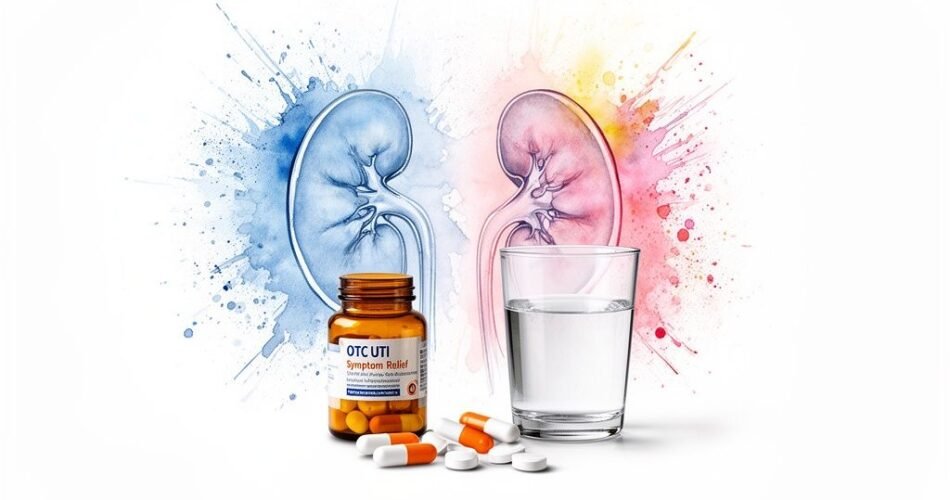
When the familiar, agonizing burn of a UTI strikes, the first thought is usually a frantic search for UTI meds over the counter. But here's the hard truth: while you can find products to temporarily soothe the painful symptoms, a real cure—an antibiotic to kill the infection—isn't something you can just grab off a pharmacy shelf. It requires a doctor's prescription.
The Urgent Search for Over-The-Counter UTI Relief

The sudden, brutal onset of a urinary tract infection sends millions of people straight to the pharmacy, desperate for a quick fix. That constant, nagging urge to urinate, paired with a sharp, burning sensation, creates a powerful need for immediate relief. It’s incredibly frustrating to discover that while you can manage the discomfort, you can’t actually cure the infection with what’s available for purchase.
This guide is here to clear up that exact confusion. We’ll break down the critical difference between products that offer temporary symptom relief and the prescription medications you actually need to knock out the bacteria causing the problem.
Clarifying Symptom Relief vs. Infection Cure
Think of it this way: using an over-the-counter (OTC) pain reliever for a UTI is like putting a small bandage on a wound that needs stitches. The bandage might cover the problem and dull the pain for a little while, but it won’t do a thing to heal the underlying injury.
In the same way, OTC urinary pain relievers can numb that awful burning feeling, but they have zero effect on the E. coli bacteria multiplying in your bladder.
To actually get rid of a UTI, you need an antibiotic. This distinction is crucial for your health. Imagine dealing with this pain late at night—no pharmacy has what you need because, in the US and most major markets, true antibiotics like nitrofurantoin require a doctor's prescription. This policy exists for a very good reason: to combat antimicrobial resistance (AMR), a global crisis where 1 in 5 E. coli UTIs now resist standard drugs. You can learn more about the global impact of antimicrobial resistance from WHO research.
Here’s a quick breakdown of what you’re looking at in the pharmacy aisle versus what a doctor can provide.
OTC Symptom Relief vs Prescription Cures
| Feature | Over-The-Counter (OTC) Products | Prescription Antibiotics |
|---|---|---|
| Primary Goal | Temporarily masks pain and burning. | Kills the bacteria causing the infection. |
| Active Ingredients | Typically phenazopyridine (a urinary analgesic). | Antibacterial agents (e.g., nitrofurantoin, Bactrim). |
| Effect on Bacteria | None. Does not treat the infection. | Directly attacks and eliminates bacteria. |
| Long-Term Outcome | Symptoms return once the product wears off. | Cures the infection and prevents complications. |
| How to Get It | Available on pharmacy shelves. | Requires a prescription from a licensed doctor. |
The takeaway here is simple: one is a temporary fix, while the other is the actual solution.
Key Takeaway: OTC products only mask UTI symptoms. Only prescription antibiotics can cure the bacterial infection and prevent it from becoming a more serious kidney infection.
Understanding this from the get-go sets realistic expectations and empowers you to seek the right kind of care. This guide will walk you through safe, effective solutions, helping you navigate your next steps toward genuine recovery.
Navigating the Pharmacy Aisle for Symptom Relief

When you walk down the pharmacy aisle hunting for UTI relief, you’ll find a handful of options that fall into two very different camps. One group is all about immediate, targeted relief from the pain and burning. The other is made up of supplements aimed more at preventing future trouble than fixing the current one.
Knowing what each of these does is the key to managing your symptoms safely while you get proper medical care. Think of it this way: one gives you a temporary cease-fire from the pain, while the other is more like a long-term defense strategy.
The Pain Reliever: Phenazopyridine
The most common and effective OTC product for UTI pain is phenazopyridine. You’ll see it as the star ingredient in brands like AZO Urinary Pain Relief. This medication acts like a local anesthetic specifically for your urinary tract.
It works by directly soothing the lining of your bladder and urethra, which dials down that intense burning sensation and the frustrating, constant urge to go. But it's absolutely critical to understand what it doesn't do.
Important Note: Phenazopyridine has zero antibacterial properties. It will not treat the underlying infection causing your symptoms. It's a pain management tool, not a cure.
It’s like using a throat lozenge for strep throat; the lozenge makes your throat feel better for a little while, but it’s doing nothing to kill the strep bacteria. Once the effect wears off, the pain comes right back because the infection is still raging. Also, fair warning: it will turn your urine a bright, almost neon orange-red. This is a normal and harmless side effect, but it can be startling if you're not expecting it.
The Prevention Supplements: Cranberry and D-Mannose
Next up, you'll spot supplements like cranberry and D-mannose, usually marketed for “urinary health.” These products work in a completely different way from pain relievers and are really meant for prevention, not for treating an active infection. They are not “UTI meds” in the sense of being a cure.
The goal of these supplements is to make it harder for bacteria—especially the usual suspect, E. coli—to stick to your bladder walls.
- Cranberry Products: These contain compounds called proanthocyanidins (PACs) that can interfere with bacteria’s ability to get a grip on the urinary tract lining.
- D-Mannose: This is a type of sugar that can also prevent bacteria from latching on, making it easier for them to be flushed out when you urinate.
While some studies suggest these can be helpful for preventing recurrent UTIs in some people, they are not a substitute for antibiotics when you have an active infection. Trying to treat a UTI with supplements alone can allow the bacteria to multiply, potentially leading to a much more serious kidney infection.
Ultimately, the pharmacy aisle offers some great tools for getting through the misery of UTI symptoms. But these products are just the supporting cast. The main character in your recovery story has to be a prescription antibiotic from a licensed medical provider.
Here’s the rewritten section, designed to sound completely human-written and natural, following the provided style guide.
Why Real UTI Antibiotics Require a Prescription
If over-the-counter products only take the edge off the pain, why can’t you just grab real UTI antibiotics off the shelf? The answer isn't about making your life harder—it’s about a critical public health shield designed to protect you and everyone else: the fight against antibiotic resistance.
This is a really important concept. Think of bacteria as an army. An antibiotic is a specific weapon designed to take out a particular kind of soldier in that army. If you use the wrong weapon, or the right one at the wrong strength, some of those soldiers are going to survive. And the ones that survive? They learn, adapt, and teach the rest of the army how to beat that weapon next time.
That's antibiotic resistance in a nutshell. Every time an antibiotic is used that isn't perfectly matched to the bacteria causing an infection, we risk creating tougher, more resilient "superbugs."
The Danger of a Mismatched Treatment
A doctor's prescription is so much more than a permission slip; it's a strategic medical decision. A healthcare provider first confirms you actually have a bacterial infection (and not something that just feels like a UTI, like bladder inflammation). Then, they choose the right antibiotic for the most likely culprit, which is usually E. coli.
Getting the treatment right is essential for a few key reasons:
- It actually works. The right medication clears the infection quickly, so you can start feeling better fast.
- It prevents complications. Proper treatment stops the infection from creeping up into your kidneys, where it can cause a much more serious condition called pyelonephritis.
- It slows down resistance. This ensures we use our most valuable antibiotics carefully, keeping them powerful for when we truly need them.
This controlled approach is why the global UTI treatment market is structured this way. Even with demand soaring toward $9.4 billion globally by 2025, the core treatments are kept behind the prescription counter because they only work when used correctly. The line between OTC symptom relief and prescription cures is firm for a very good reason. You can discover more insights about the UTI treatment market trends and forecasts.
Protecting Your Health and Global Well-Being
Every single time an antibiotic is used correctly, it’s a win for your personal health and for the collective good. By requiring a prescription, the medical system adds a crucial layer of defense against the casual overuse of these powerful drugs.
A prescription ensures you get the right weapon for the right fight. It protects you from the immediate risk of a worsening infection and helps protect everyone from the long-term threat of antibiotic-resistant bacteria.
Ultimately, this system is in place to keep you safe. The wrong antibiotic can just mask your symptoms without actually curing the infection, giving it time to turn into a serious threat. A doctor's diagnosis is simply the fastest, safest, and most effective way to get better—and to make sure our strongest medicines are still there for us when we need them most.
Red Flag Symptoms That Demand Immediate Medical Care
Over-the-counter products are fantastic for taking the edge off UTI pain, but it's critical to remember they're just a temporary fix. Think of them as a buffer, not a cure.
You have to know when your body is sending signals that this isn't just a simple bladder issue anymore. Sometimes, the infection can escalate, traveling up to the kidneys—a much more serious condition called pyelonephritis. Ignoring these signs can lead to major health complications. These aren't just suggestions; they're non-negotiable alerts that it’s time to get professional medical help, and fast.
Alarming Symptoms You Cannot Ignore
If you start noticing any of the following symptoms on top of the usual UTI misery (burning, urgency), it's a huge red flag. It likely means the infection has made its way from your bladder to your kidneys, and that requires urgent medical attention.
- Fever and Chills: A body temperature climbing over 100.4°F (38°C), or getting the shakes and chills, means your body is launching a system-wide fight against a worsening infection.
- Severe Back or Flank Pain: This isn't your typical muscle ache. We're talking about a deep, sharp pain on one side of your mid-back, right below your ribs where your kidneys are. It’s persistent and hard to ignore.
- Nausea and Vomiting: Feeling sick to your stomach or not being able to keep anything down are classic signs that a kidney infection is seriously disrupting your system.
A kidney infection is a serious medical condition. Do not try to wait it out or manage it with uti meds over the counter. Prompt treatment with prescription antibiotics is essential to prevent further complications.
This chart helps break down that crucial decision: when is it okay to manage symptoms at home, and when do you absolutely need to see a doctor?

The key takeaway is simple: UTI symptoms should always prompt a professional evaluation to make sure you're getting the right treatment for what's really going on.
High-Risk Groups Who Should Always See a Doctor
For some people, even a "simple" UTI carries a higher risk of complications. If you fall into one of these groups, you should skip the OTC aisle entirely and contact a healthcare provider the moment you feel symptoms coming on.
This includes:
- Pregnant Women: A UTI during pregnancy can create risks for both mom and baby, so it needs to be handled by a doctor right away.
- Men: UTIs are far less common in men and can signal a deeper, underlying issue that needs to be properly diagnosed.
- Individuals with Diabetes: High blood sugar levels can make it harder for the immune system to fight off infections effectively.
- Anyone with a Compromised Immune System: When your body's defenses are already low, you need backup from prescription medication to beat the infection.
Knowing when to act is everything. You can learn more about managing UTIs in women in our more detailed guide. Ultimately, getting timely care is always the safest and most effective way to get back to feeling like yourself.
How to Get a UTI Prescription Online Today

You’ve tried the over-the-counter route and realized it’s just not cutting it. You need a real prescription, but the very thought of squeezing a doctor's visit into your life—the phone calls, the time off work, the sterile waiting room—is exhausting.
This is exactly where modern healthcare offers a much smarter path forward: telemedicine.
Getting a prescription for a UTI online isn't a futuristic fantasy anymore. It’s a simple, secure, and incredibly efficient reality. Telehealth services are designed to completely demolish the old barriers standing between you and the care you need, putting a licensed medical provider at your fingertips the moment you need one.
This isn't just about convenience; it's a critical tool for your health. Untreated UTIs can lead to serious complications, and the stress of dealing with the symptoms is real. In fact, over 50% of patients report significant anxiety while they're suffering. Getting fast, effective care is everything. You can read the full research about the global impact of UTIs and the need for prompt care.
How Online UTI Treatment Works
The whole process is refreshingly simple and built for speed and privacy. It turns what used to be a multi-day ordeal into something you can check off your list from the couch in just a couple of hours.
- Start Your Online Visit: You’ll start by choosing your condition (in this case, a UTI) on a secure platform. Then, you'll fill out a confidential but detailed questionnaire covering your symptoms and medical history.
- A Doctor Reviews Your Case: A board-certified, U.S.-licensed physician reviews all your information, often within an hour or two. This is the same level of professional evaluation you'd get in a physical office.
- Receive Your Treatment Plan: The doctor provides a diagnosis and a personalized plan. If an antibiotic is the right call for your situation, they will send the prescription electronically straight to your local pharmacy.
- Pick Up Your Medication: All that's left is to swing by your pharmacy and pick up your prescription. It's often ready on the very same day.
Telemedicine simply erases the old hurdles of time, distance, and inconvenience. It gives you a direct line to a medical professional, ensuring you get the right diagnosis and the right antibiotic without the wait.
This model is a perfect fit for anyone who is too swamped for an in-person appointment, needs care after hours, or just wants the fastest possible path to feeling better.
If you’re looking for help right now, you can learn more about getting online UTI treatment right now. Telehealth delivers the prescription you need with the convenience you absolutely deserve.
Your Top Questions About UTI Meds and Treatment, Answered
When you're dealing with a UTI, you've got questions. It's completely normal. You've learned the crucial difference between just managing symptoms and actually curing the infection, but a few practical concerns always pop up.
Let's walk through the most common questions we hear. Think of this as a final gut-check to clear up any lingering doubts about over-the-counter products, antibiotics, and when it's absolutely time to see a doctor. The goal is to get you feeling confident and ready to make the right moves for your health.
Should I Take OTC Meds While Waiting for a Doctor?
Yes, grabbing an over-the-counter pain reliever like phenazopyridine (the active ingredient in products like AZO) is a smart move while you're waiting to talk to a doctor. It can make a huge difference in taming that awful burning and urgency, making the wait far more tolerable.
But—and this is a big but—you have to see it for what it is: a temporary fix. A bridge. Don't put off getting a real diagnosis and a prescription for more than a day or two. That pain reliever is just putting a mask on the problem while the bacteria behind the scenes are still multiplying.
How Long Does It Take for Antibiotics to Work?
Once you start on prescription antibiotics for a straightforward UTI, you should start feeling a whole lot better within 24 to 48 hours. The fire-like burning should start to cool down, and that constant, nagging feeling of needing to pee will begin to fade.
It is absolutely critical that you finish the entire course of antibiotics your doctor prescribes. I can't stress this enough. It doesn't matter if you feel 100% back to normal after just a couple of days. Stopping early is a huge gamble.
Crucial Point: When you stop taking antibiotics too soon, you’re basically letting the toughest, most resilient bacteria survive. This not only makes it more likely for your UTI to come roaring back, but it also fuels the bigger, global problem of antibiotic resistance.
Can a UTI Go Away on Its Own Without Treatment?
Technically, it's possible for a very, very mild UTI to clear up on its own, but it is highly inadvisable to just wait and see. The risk of that infection deciding to travel from your bladder up to your kidneys is a serious one, and it's simply not worth taking.
A bladder infection (cystitis) is usually pretty simple to knock out with the right antibiotics. A kidney infection (pyelonephritis) is a whole different ballgame. It can lead to serious complications, a possible hospital stay, and much stronger, more aggressive treatments. Always, always err on the side of caution and get it treated.
Is It a UTI or Something Else?
Sometimes, symptoms that scream "UTI" are actually caused by something else entirely. For instance, a condition called interstitial cystitis—which is a type of chronic bladder inflammation—can mimic all the classic UTI symptoms, but a urine test will show no bacteria.
This is another huge reason why getting a professional diagnosis is so important. A doctor can figure out if you're dealing with a bacterial infection or another issue, which keeps you from taking antibiotics you don't need. Overusing antibiotics can throw your body's good bacteria out of whack and contribute to resistance. You can find more detailed answers to your questions in our comprehensive ChatWithDr FAQ section.
Once you have a prescription, staying on top of your doses is key to getting better. A simple but effective tool like this Medication Tracker can be a lifesaver for making sure you take every pill on schedule and finish the full course.
What if I Get UTIs Frequently?
If you've had two or more UTIs in the last six months, or three within a year, you might be dealing with what doctors call recurrent UTIs. This isn't something you just have to live with. It calls for a deeper conversation with a doctor to figure out potential root causes and come up with a prevention plan.
That plan might involve things like:
- Probiotics: To help support a healthy balance of bacteria.
- Supplements: Some people find success with things like D-mannose or specific cranberry extracts.
- Lifestyle Tweaks: This could include changes to your hydration habits or peeing after sex.
When UTIs keep coming back, just treating them one by one isn't a long-term solution. A proactive strategy, guided by a medical professional, is the best way to finally break that frustrating cycle.
When you need fast answers and a prescription without the wait, ChatWithDr provides 24/7 access to board-certified physicians who can diagnose your symptoms and send a treatment plan to your pharmacy in hours. Start your confidential online visit today.