

It's 9 PM on a Tuesday, and you're experiencing that all-too-familiar burning sensation, unusual discharge, or uncomfortable itching. You know you need treatment, but the thought of sitting in an urgent care waiting room for hours, surrounded by people coughing and sneezing, feels almost as bad as the symptoms themselves. What if there was a better way?
For millions dealing with urinary tract infections (UTIs), bacterial vaginosis (BV), or yeast infections, the traditional healthcare route often means unnecessary waiting, awkward conversations in public spaces, and time away from work or family. Text-based telehealth is changing this equation entirely.
Understanding These Common Infections
Before diving into treatment options, let's clarify what we're dealing with. UTIs occur when bacteria enter the urinary tract, causing symptoms like painful urination, frequent urges to pee, and lower abdominal discomfort. According to the National Institute of Diabetes and Digestive and Kidney Diseases, UTIs are among the most common bacterial infections, affecting millions annually.
Bacterial vaginosis happens when the natural balance of bacteria in the vagina gets disrupted, leading to discharge with a fishy odor, itching, and burning. Meanwhile, yeast infections, caused by an overgrowth of Candida fungus, create thick, white discharge and intense itching.
What all three conditions share in common: they're incredibly uncomfortable, highly treatable, and don't typically require physical examination for diagnosis in straightforward cases.
The Urgent Care Time Trap
Let's be honest about what seeking treatment at urgent care actually looks like. The average urgent care wait time ranges from 30 minutes to over two hours, depending on your location and time of day. For many working professionals, this means:
- Taking time off work or rearranging childcare
- Driving to the facility and finding parking
- Sitting in a crowded waiting room during cold and flu season
- Having sensitive conversations with staff and providers in semi-private spaces
- Waiting for prescriptions at the pharmacy afterward
- Total time investment: 3-4 hours minimum
For an infection that you've likely experienced before and recognize immediately, this process feels unnecessarily cumbersome. You know what you need, antibiotics for a UTI or BV, or antifungal medication for a yeast infection, but the system requires you to jump through multiple hoops to get it.
Why Text-Based Telehealth Makes Sense for These Conditions
The beauty of conditions like UTIs, yeast infections, and BV is that experienced healthcare providers can often diagnose them based on your symptom description alone, especially if you've had them before. This makes them ideal candidates for text-based medical consultations.
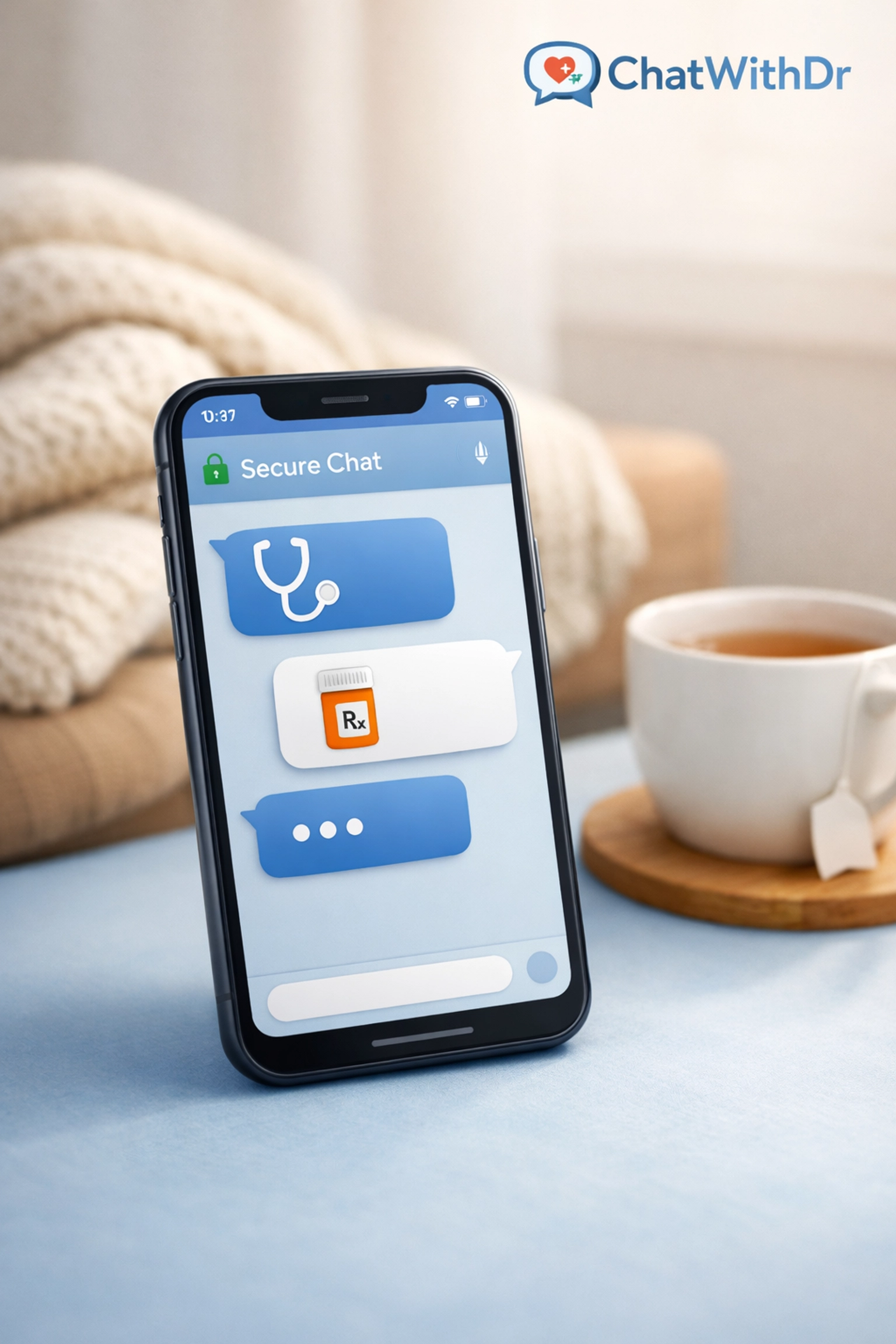
When you chat with doctors through secure medical messaging, you can describe your symptoms in detail from anywhere, your home, your office, even your car. Licensed physicians can review your medical history, ask follow-up questions, and determine whether your symptoms match the classic presentation of these infections.
For online UTI treatment, providers typically ask about:
- Burning or pain during urination
- Frequency and urgency
- Lower abdominal pressure
- Urine appearance
- Fever or back pain (which might indicate a kidney infection requiring different care)
Similarly, yeast infections and BV have distinctive symptom patterns that experienced providers recognize through detailed questioning. The Centers for Disease Control and Prevention notes that these common conditions are frequently diagnosed based on symptoms and patient history.

The Privacy Factor
Let's address the elephant in the room: these conditions involve intimate body parts and uncomfortable symptoms. Many people find it mortifying to discuss discharge, odor, or genital itching with strangers in a busy medical office where conversations can be overheard through thin walls.
Text-based consultations eliminate this awkwardness entirely. You can type out your symptoms in complete privacy, using your own words, without feeling rushed or embarrassed. There's no worried glance at the door wondering if someone can hear your conversation. No trying to whisper about yeast infection symptoms to a receptionist at the check-in desk.
This discretion is particularly valuable for conditions like BV, which carries unfair stigma despite being a common bacterial imbalance that can happen to anyone. The ability to seek yeast infection treatment online through secure messaging means you can get help without any of the social discomfort.
Speed and Convenience That Actually Matters
When you're experiencing the burning pain of a UTI or the maddening itch of a yeast infection, every hour matters. Text-based telehealth platforms operate differently than urgent care:
Urgent Care Timeline:
- Drive to facility: 15-30 minutes
- Wait in reception: 30-120 minutes
- See provider: 10-15 minutes
- Drive to pharmacy: 10-15 minutes
- Wait for prescription: 15-30 minutes
- Total: 2-4 hours
Text-Based Telehealth Timeline:
- Open app and describe symptoms: 5-10 minutes
- Provider reviews and responds: 15-60 minutes
- Prescription sent to pharmacy: Immediate
- Pick up when convenient or have it delivered
- Total active time: 20-30 minutes
With 24/7 telehealth doctor access, you're not bound by urgent care hours. Need help at 11 PM? No problem. Sunday morning? Absolutely. This flexibility is crucial because infections don't care about business hours.

Cost-Effectiveness Worth Considering
Urgent care visits for straightforward infections often feel like overkill from a cost perspective. You're paying facility fees for complex medical infrastructure you don't actually need. Many urgent care visits for these conditions cost $150-300 before insurance, with additional pharmacy costs.
Text-based telehealth consultations typically cost a fraction of this amount because there's no overhead for maintaining physical facilities, managing waiting rooms, or coordinating complex staffing schedules. You're paying for what you actually need: a licensed provider's medical expertise and a valid prescription.
For those managing recurrent infections: like the estimated 20-30% of women who experience multiple UTIs annually: these savings add up quickly. The ability to chat with doctors at the first sign of familiar symptoms, before they worsen, can also prevent complications that might require more intensive (and expensive) treatment later.
How It Actually Works
The process of getting treatment through secure medical messaging is straightforward:
Describe Your Symptoms: Using a secure platform, you detail what you're experiencing, when it started, and any relevant medical history.
Provider Review: A licensed physician reviews your information and may ask follow-up questions to ensure accurate diagnosis.
Treatment Plan: If your symptoms match a common infection and you're a good candidate for remote treatment, the provider sends a prescription to your chosen pharmacy.
Follow-Up: Most platforms allow continued messaging if symptoms don't improve or if you have questions about your treatment.
For conditions like UTIs in women, providers can often diagnose confidently based on classic symptoms. The same applies to typical yeast infection presentations and BV symptoms.

When In-Person Care Is Still Necessary
Text-based telehealth isn't appropriate for every situation, and reputable platforms make this clear. You should seek in-person medical care if you experience:
- High fever (over 101°F) with UTI symptoms, which might indicate a kidney infection
- Severe abdominal or back pain
- Blood in urine
- Symptoms that don't improve after 2-3 days of treatment
- Recurrent infections (more than 3-4 per year)
- Pregnancy combined with any of these infections
- First-time symptoms that you can't clearly identify
Responsible telehealth services will redirect you to in-person care when your symptoms suggest complications or when remote diagnosis isn't appropriate. The goal isn't to replace all medical care with text-based consultations: it's to provide efficient, convenient treatment for straightforward conditions while ensuring you get appropriate care for more complex situations.
The Bottom Line
For the millions of people who experience UTIs, BV, or yeast infections regularly, the traditional healthcare system often feels like unnecessary bureaucracy standing between you and relief. Sitting in urgent care waiting rooms for conditions you've had before and can clearly identify doesn't serve anyone well.
Text-based telehealth offers a sensible alternative: discreet, convenient, and appropriately comprehensive care for straightforward infections. You get the medical expertise you need without the time investment, awkward public discussions, or exposure to other illnesses in crowded waiting rooms.
The next time you recognize those familiar symptoms, consider whether texting a doctor might be the faster, more comfortable path to treatment. Your evening plans: and your bladder: will thank you.
Disclaimer: This information is not a substitute for professional medical advice, diagnosis, or treatment. Always seek the advice of your physician or qualified health provider with questions regarding medical conditions or treatments.
Related posts:
 Understanding yeast infection after antibiotics treatment: Quick remedies
  Yeast Infection Symptoms in Women: How to Spot Signs and Find Relief
  How to Prevent Recurring Yeast Infections for Good
  Fast Yeast Infection Treatment Online Your Complete Guide
  Yeast Infection vs BV: How to Tell the Difference