

Yes, you can absolutely get a virtual doctor visit with no insurance, and it’s often surprisingly affordable. Telehealth platforms are designed to bypass the usual complexities of healthcare costs, giving you direct access to medical advice, diagnoses, and prescriptions for a flat, upfront fee—many times for less than $100 per visit.
Your Guide to Affordable Online Healthcare
Staring down a potential medical bill without insurance can be intimidating, but affordable virtual care is a real, practical solution. It creates a direct and cost-effective bridge to medical professionals, getting rid of the financial guesswork and long waits that often come with traditional clinics. This guide is here to cut through the confusion and show you exactly how to get the care you need, without the stress.
Think of it this way: telehealth unbundles healthcare from the complicated insurance system. Instead of trying to figure out deductibles and copays, you just pay a single, transparent price for a specific service. This model puts you back in control, letting you make health decisions based on clear, upfront costs.

Why Telehealth Works Without Insurance
The secret to why virtual care is so accessible is its efficiency. By cutting out the massive overhead of a physical office—like rent, administrative staff to handle billing, and other operational costs—telehealth providers can pass those savings directly on to you. This is exactly why a virtual doctor visit with no insurance often costs less than a typical urgent care copay for someone with insurance.
This streamlined approach is a game-changer for common health needs like:
- Common Illnesses: Get fast treatment for things like sinus infections, UTIs, or pink eye.
- Prescription Refills: Easily manage your ongoing medications without a time-consuming office visit.
- Minor Health Concerns: Address issues like rashes, allergies, or a nasty cough right from your home.
The core advantage is refreshingly simple: you pay only for the doctor's time and expertise. There are no hidden facility fees or surprise charges for services you don't need, making it a straightforward, honest transaction for essential medical care.
We'll walk you through how it all works, what to expect during a visit, and how to find a provider you can trust.
Understanding Your Virtual Care Options
When you need a virtual doctor visit without insurance, it helps to know that not all online consultations are the same. Think of it like modern communication: sometimes a quick text is all you need, while other times a face-to-face video call is much better. Telehealth works the same way, with different formats to fit your medical needs and your budget.
Getting a handle on these options is the first step toward finding the right care at the right price. The two main types you'll run into are text-based visits (asynchronous) and live video or phone calls (synchronous). Each one has its own strengths, depending on what's going on with your health.
Text-Based vs. Live Video Consultations
An asynchronous or text-based visit is like having a secure, private chat with a doctor. You’ll fill out a form with your symptoms and medical history, and a physician reviews it on their own time. They typically get back to you with a diagnosis and treatment plan within a few hours. This setup is perfect for straightforward, non-urgent issues.
On the other hand, a synchronous visit is a real-time conversation over video or a phone call. You schedule an appointment and connect directly with a doctor, just like a video chat. This format is much better for issues where a doctor needs to see you or when you need a more immediate back-and-forth discussion.
Key Takeaway: The big difference is timing and interaction. Asynchronous visits offer convenience and privacy, while synchronous visits provide immediate, direct communication with a healthcare provider.
The great news for anyone paying out of pocket is that both models are usually much more affordable than traditional care. For example, recent data shows that patients without insurance pay an average of $79 per telemedicine consultation. That makes it a budget-friendly alternative to a costly trip to urgent care. If you're interested, you can discover more insights on how telehealth is making healthcare accessible on getstream.io.
Comparing Your Virtual Visit Options
Use this quick comparison to decide which type of telehealth visit is the right fit for your medical needs and budget.
| Feature | Live Video or Phone Visit (Synchronous) | Text or Message-Based Visit (Asynchronous) |
|---|---|---|
| Interaction | Real-time, face-to-face conversation with a doctor. | Send and receive messages with a doctor on your own schedule. |
| Best For | Complex symptoms, mental health therapy, or when a visual assessment is needed. | Prescription refills, common illnesses (UTIs, sinus infections), and skin conditions. |
| Speed | Immediate diagnosis and feedback during the appointment. | Diagnosis and treatment plan typically delivered within a few hours. |
| Convenience | Requires scheduling a specific appointment time. | No appointment needed; submit your information anytime. |
| Cost | Generally a bit more expensive due to the real-time interaction. | Often the most affordable option, with a flat fee for the consultation. |
No matter which path you choose, matching your health concern to the right type of visit ensures you get effective care without breaking the bank.
Choosing the Right Visit Type
So, how do you decide? It really comes down to the nature of your health concern. Here’s a quick guide to help you choose the best option for a virtual doctor visit no insurance.
Choose a Text-Based Visit for:
- Prescription Refills: Easily manage ongoing medications like birth control or blood pressure medicine.
- Common Illnesses: Get help for issues like sinus infections, UTIs, or pink eye where the symptoms are clear-cut.
- Skin Conditions: Get a diagnosis for rashes, acne, or other minor skin issues by simply uploading a few photos.
Choose a Live Video Visit for:
- Complex Symptoms: Talk through multiple or confusing symptoms that need a detailed conversation.
- Mental Health: Engage in therapy or psychiatric sessions where direct interaction is essential.
- Visual Assessment: Let a doctor see your throat to check for strep, observe your breathing, or look at a swollen joint.
Many platforms now offer a range of different telehealth services to cover all these needs. By matching your medical issue to the right consultation type, you can make sure your virtual visit is both effective and easy on your wallet.
How Much Does a Virtual Doctor Visit Cost Without Insurance?
Let's get straight to the point: for anyone without insurance, the biggest question about healthcare is always the price. The great news is that virtual doctor visits offer something traditional healthcare rarely does—cost transparency. Forget about confusing bills showing up weeks later. With telehealth, you typically pay a single, flat fee right upfront.
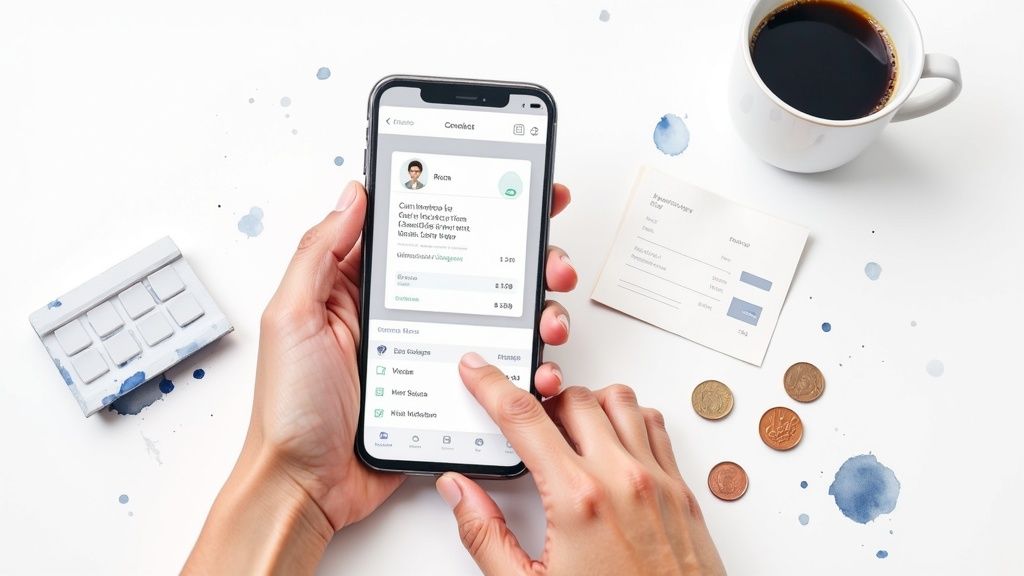
This direct-to-you model cuts out a ton of the administrative bloat, which is why providers can offer care for a fraction of what an in-person visit would cost. You're just paying for the doctor's time and expertise. That’s it.
What You Can Expect to Pay for Common Issues
For most everyday urgent care needs, you should plan to pay anywhere from $35 to $99 for a one-time virtual visit. This price almost always covers the entire consultation, the diagnosis, a treatment plan, and a prescription if your doctor decides you need one.
Here’s a quick breakdown of typical price ranges for different types of care:
- General Urgent Care: For problems like sinus infections, UTIs, colds, or pink eye, prices usually land between $39 and $79.
- Prescription Refills: Simple renewals for existing medications, like birth control or blood pressure medicine, are often on the lower end, around $35 to $60.
- Mental Health Therapy: A live video session with a therapist is a bit more involved, so it typically costs more, ranging from $99 to $175 per session.
- Specialist Consultations: Seeing a specialist like a dermatologist or a psychiatrist will be the most expensive, often starting at $125 and climbing to $300 or more.
To put that in perspective, the average in-person urgent care visit can easily cost $150 to $200 without insurance—and that’s before any tests or extra procedures.
The biggest win here is predictability. With telehealth, the price you see is the price you pay. This gets rid of the financial anxiety that comes with surprise medical bills, so you can focus on getting the care you need when you need it.
Comparing Payment Models
When you start looking at different platforms, you'll generally run into two main ways to pay. Figuring out which one fits your situation will help you get the most bang for your buck.
Single Per-Visit Fee
This is the most common model, especially for urgent care. You simply pay a one-time flat fee for a single consultation.
- Best for: Infrequent medical issues, like when you get a sudden illness or need a one-off prescription.
- Pros: There’s no commitment. You only pay when you need care, and the pricing is totally transparent.
- Example: A platform like ChatWithDr offers consultations for a straightforward $39.99 flat fee, making it perfect for immediate, no-fuss health concerns.
Subscription or Membership Plans
Some platforms offer a monthly or annual fee that gives you unlimited access to doctors or a certain number of visits.
- Best for: Individuals or families with chronic conditions, ongoing mental health needs, or anyone who thinks they'll need frequent medical advice.
- Pros: Can be much cheaper in the long run if you use it regularly and it offers continuous care.
- Cons: You're locked into an ongoing financial commitment, which might not be cost-effective if you rarely need to see a doctor.
Ultimately, the right choice really depends on your specific healthcare needs. For most people looking for a virtual doctor visit no insurance to solve a specific problem, the pay-per-visit model delivers the best value and flexibility. It keeps you in control of your spending without tying you to a recurring fee.
How to Find the Right Telehealth Provider
With so many telehealth platforms popping up, trying to pick the right one for a virtual doctor visit with no insurance can feel a bit like searching for a needle in a haystack. The goal isn't just to find the cheapest service. You're looking for a trustworthy, qualified, and secure platform that actually fits what you need.
Instead of getting lost in a sea of online searches, a simple checklist can help you cut through the noise. This lets you look past the slick marketing and find a service that offers both quality care and peace of mind. Think of it as a quick but essential background check before you trust someone with your health.
Verifying a Provider’s Credentials
Your first move should always be to confirm that the doctors on the platform are the real deal. Reputable telehealth companies are transparent about their physicians' qualifications and make it easy for you to check.
Here are the key credentials to look for:
- Board Certification: This tells you a doctor has completed advanced training in their specialty and passed a tough exam. Look for phrases like "board-certified" in their online bios.
- State Licensure: A doctor has to be licensed in the state where you are located to treat you legally. Trustworthy platforms will always connect you with a physician licensed to practice in your specific state.
Most telehealth websites have a dedicated section about their medical team. If that information is buried or missing, take it as a major red flag.
Checking Patient Reviews and Reputation
Nothing beats hearing from real patients. Their feedback gives you invaluable insight into how a service actually operates. While no company has a flawless record, you should look for consistent patterns in what people are saying. Do they rave about the speed and convenience? Do they mention helpful, compassionate doctors?
Telehealth has become a normal part of healthcare, and today, 54% of Americans have had at least one virtual visit. Satisfaction rates are through the roof, with 89% of users reporting a positive experience. This widespread adoption means there’s a ton of reviews out there you can use for your research. You can read the full details about the state of telehealth in 2025 on dimins.com.
Check out third-party sites like Trustpilot or Google Reviews for unbiased opinions. Pay special attention to comments about the user experience, how the doctors communicate, and how the platform handles issues for patients seeking a virtual doctor visit no insurance. This will paint a much clearer picture of what you can expect.
Matching Services to Your Needs
Finally, make sure the provider can actually help with your specific problem. Not all platforms treat the same conditions, so it pays to check their list of services before you commit.
Ask yourself these simple questions:
- Do they treat my specific condition? Look for a clear list of the illnesses they handle, like UTIs, sinus infections, or skin rashes.
- What is their prescribing policy? If you think you'll need a prescription, confirm they can send it to your local pharmacy.
- Is the platform secure? A legitimate provider will be HIPAA-compliant. This is a non-negotiable that ensures your personal health information is kept private and secure.
Taking these few simple steps will help you confidently choose a telehealth provider that’s not just affordable and convenient, but also highly qualified and dedicated to your well-being.
What to Expect During and After Your Virtual Visit

If you’ve never had a virtual appointment, it’s totally normal to feel a little unsure about how it all works. But the entire process is designed to be straightforward and stress-free, getting you from booking a visit to picking up a prescription with no guesswork.
Think of it as a much faster version of a clinic visit, just without the waiting room. The whole setup for a virtual doctor visit with no insurance is built for convenience, so you can get the help you need and get on with your day.
Preparing for Your Consultation
The first step happens right after you book. You’ll fill out a secure online intake form, which is your chance to give the doctor all the key details before they even start reviewing your case. This is a critical step for a successful consultation.
To get the most out of your visit, be ready to share a few things:
- Your Symptoms: Be specific. Instead of just saying "sore throat," mention when it started, if you have a fever, or if you've noticed white spots on your tonsils.
- Medical History: Don't forget to list any pre-existing conditions, known allergies, and any medications you're currently taking.
- Photos (If Needed): For visual issues like a skin rash or pink eye, uploading a few clear photos can make all the difference in getting an accurate diagnosis.
This prep work is key. The more detail you give upfront, the better equipped the physician is to create an effective treatment plan for you. You can see a breakdown of this process by reviewing how it works on our platform.
A common question is whether virtual care is really as good as seeing a doctor in person. The answer is a resounding yes. Tons of research has confirmed its clinical effectiveness, showing telehealth delivers comparable, and sometimes even better, outcomes for many common conditions.
This high level of success is why telehealth has become such a trusted option for so many people. In fact, one major study found that most virtual visits didn't require an in-person follow-up within 90 days, proving that online care is often a complete solution.
After Your Visit Ends
Once the doctor reviews your information and gives you a diagnosis, the next steps are seamless.
If a prescription is medically necessary, it’s sent electronically to your preferred local pharmacy, often within just a few minutes of your consultation ending. You'll get a notification as soon as it's ready for pickup.
You will also receive a complete summary of your visit, which includes your diagnosis and the doctor’s treatment recommendations. This digital record is stored safely in your patient portal, so you can access it anytime you need it.
Finding Other Low-Cost Healthcare Options
While telehealth apps are a fantastic tool when you need a virtual doctor visit without insurance, they aren't the only game in town. A smart healthcare strategy means knowing all your resources, and that includes the incredible low-cost options often hiding in plain sight in your own community.
Many community-based clinics and even retail stores offer affordable care and are increasingly adding their own virtual services. Knowing this wider network of support means you always have a place to turn, whether you need a quick video chat or a hands-on exam.
Community Health Clinics
Federally Qualified Health Centers (FQHCs) and similar community clinics are the bedrock of affordable care in the U.S. These are non-profit centers that get federal funding specifically to provide comprehensive primary care to underserved communities, regardless of someone's ability to pay.
The biggest advantage here is their sliding-scale fee model. This is a game-changer. It means what you pay is directly tied to your income and family size. For many people, this knocks the cost of a visit down to something incredibly manageable, sometimes as low as $15 or $20.
These clinics aren't just for emergencies. They offer everything from routine check-ups and help with chronic conditions like diabetes to dental and mental health care. They're designed to be a true medical home for uninsured patients.
You can easily find an FQHC in your area by using the official search tool on the U.S. Health Resources and Services Administration (HRSA) website.
Retail Health Clinics
You’ve definitely seen these—the small clinics tucked inside major pharmacies and stores like CVS (MinuteClinic) or Walgreens. They are another excellent low-cost option, built entirely around convenience and price transparency.
Staffed by nurse practitioners and physician assistants, retail clinics are perfect for handling common, straightforward illnesses like strep throat, minor infections, or the flu. Their model is simple and effective:
- Fixed Pricing: They post a clear menu of services with prices listed right upfront. You know the exact cost before you even walk in. No surprise bills.
- Walk-in Convenience: Most locations don't require an appointment, making them perfect for those immediate, non-emergency health issues that just can't wait.
- Integrated Services: Since you're already in the pharmacy, you can get diagnosed and pick up your prescription all in one stop.
By combining the speed of telehealth with the accessibility of community and retail clinics, you can build a flexible, affordable healthcare plan that truly has your back.
Your Top Questions About Telehealth Without Insurance
Even with all the benefits, it's natural to have a few practical questions before trying a virtual doctor visit without insurance. It's smart to be thorough when it comes to your health. So, let's clear up some of the most common concerns to help you feel completely confident about getting care online.
This simple decision path shows exactly how telehealth fits into your healthcare options when you're trying to keep costs down.
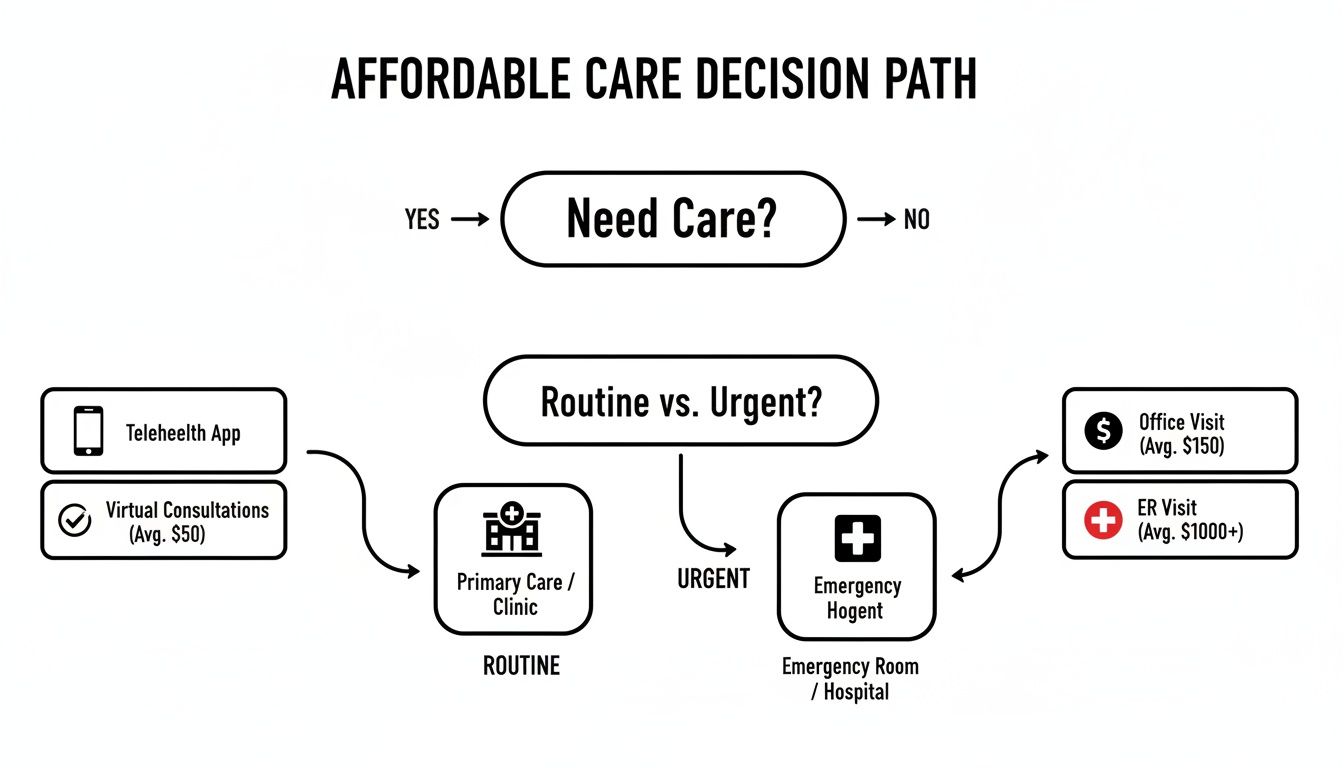
The main takeaway here is pretty clear: for anything that isn't a true emergency, telehealth is often the most direct and affordable route to getting a diagnosis and treatment, letting you skip the higher costs and logistical headaches of an office visit.
Can I Still Get a Prescription Without Insurance?
Yes, absolutely. This is one of the most common questions people have, and the answer is a definite yes. Licensed telehealth doctors can legally and safely prescribe most medications if they decide it's medically necessary during your consultation.
The process is seamless. The prescription is sent electronically straight to your preferred local pharmacy. You'll then pay the pharmacy directly for the medicine itself. Here’s a pro tip: always ask your doctor if a generic version of the medication is available and use a free prescription discount app. It can dramatically lower what you pay at the counter.
Is My Personal Health Information Kept Private and Safe?
Your privacy is non-negotiable. Reputable telehealth companies are legally required to be HIPAA-compliant, which is the same federal standard your regular doctor's office follows. This means they use bank-level security and encryption to protect every piece of your health information.
Your consultation, personal details, and medical history are kept completely confidential. Before signing up for any service, take a moment to look for a HIPAA compliance statement on their website. It's your best guarantee that your data is in safe hands. For those trying to figure out how to manage healthcare costs in general, it's also helpful to understand whether virtual doctor visits or telemedicine consultations are covered by some insurance plans.
What Conditions Aren't Right for a Virtual Visit?
Virtual care is a fantastic tool for common illnesses like colds, sinus infections, and UTIs. It's also a great way to manage ongoing conditions or get mental health support. However, it is not for medical emergencies.
For serious issues like chest pain, severe bleeding, difficulty breathing, broken bones, or any signs of a stroke, you must call 911 or go to an emergency room immediately. Telehealth is specifically designed for non-emergency situations where you need fast, convenient care.
If you have more questions, you can always dig deeper on a full FAQ page about telehealth.
Related posts:
 The 7 Best Online Doctor Services of 2025: A Detailed Review
  Decoding the Virtual Doctor Visit Cost for Smart Healthcare
  Your Guide to Virtual Urgent Care Online Doctor Visits
  Your Guide to Finding a Virtual Doctor No Insurance
  Explore do you need insurance for urgent care and what it means for your visit