
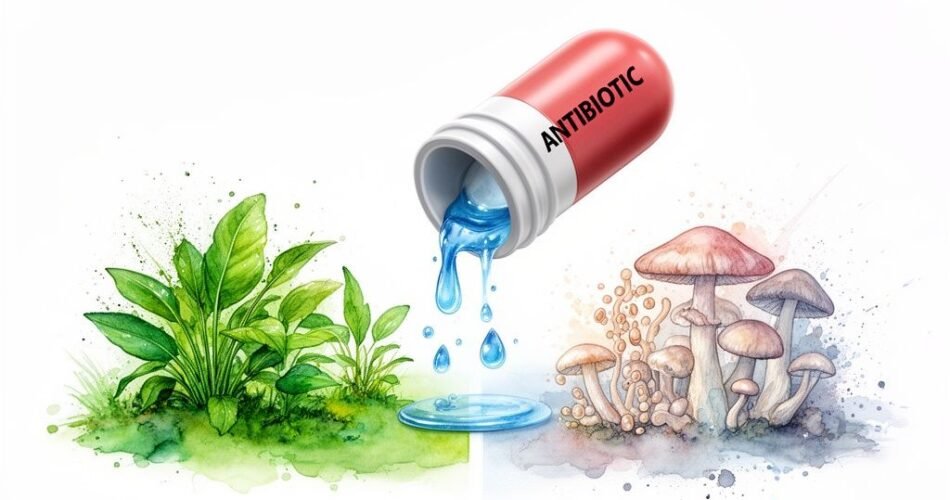
It’s a frustratingly common scenario: you take a course of antibiotics to clear up one infection, only to end up with another one. A yeast infection after antibiotics treatment is a frequent and treatable side effect of the very medicine meant to make you better.
The reason is simple. While antibiotics are great at wiping out harmful bacteria, they also take out the beneficial bacteria that keep your body’s natural yeast in check. This disruption gives the naturally present Candida yeast a chance to grow out of control, leading to those all-too-familiar uncomfortable symptoms.
The Unwanted Side Effect: Why Antibiotics Trigger Yeast Infections
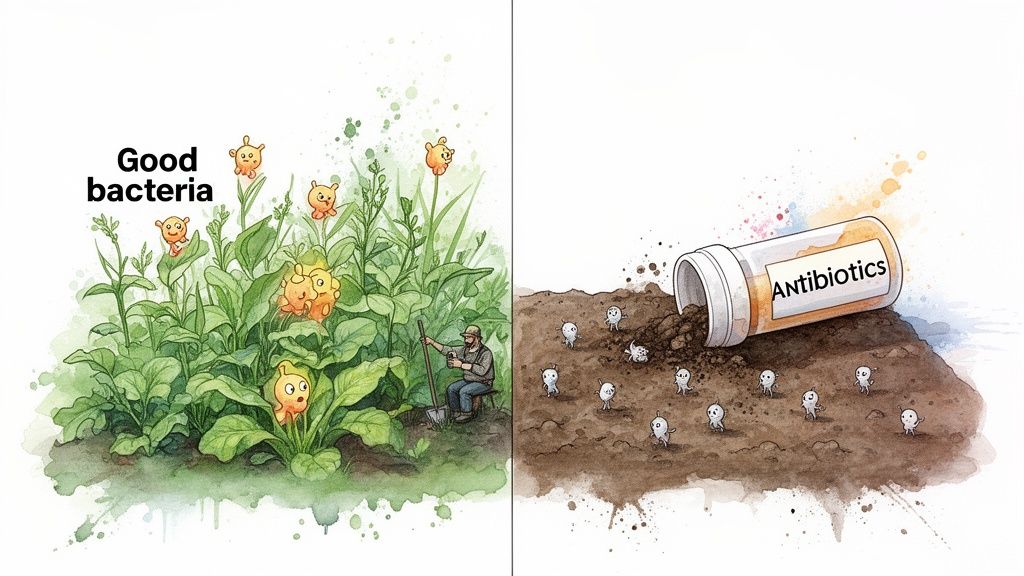
Think of your body's microbiome as a bustling, well-balanced garden. The helpful bacteria are like your prized plants, keeping everything in harmony. The small amount of yeast (Candida) that naturally lives there is like a stray weed—mostly harmless and kept under control by the healthier plants.
When you take an antibiotic to knock out a bacterial infection (the pests in your garden), it acts like a powerful, non-selective weed killer.
It does a great job of eliminating the bad bacteria causing your illness, but it can’t tell the good guys from the bad guys. The antibiotic wipes out many of your protective bacteria right along with them. This suddenly clears the field, leaving the tough and resilient Candida yeast with no competition. It seizes the opportunity to grow wild, quickly turning into a full-blown yeast infection.
This is exactly how a necessary treatment can become the source of a brand-new problem.
Understanding The Microbiome Imbalance
At the heart of it all is the disruption of your vaginal flora. Normally, protective bacteria like Lactobacillus produce lactic acid, which keeps the vaginal environment acidic and hostile to yeast overgrowth. When antibiotics reduce the number of these bacterial guardians, the pH of the vagina can shift, becoming less acidic and creating the perfect environment for Candida to flourish.
This is a classic domino effect—one change directly leads to another.
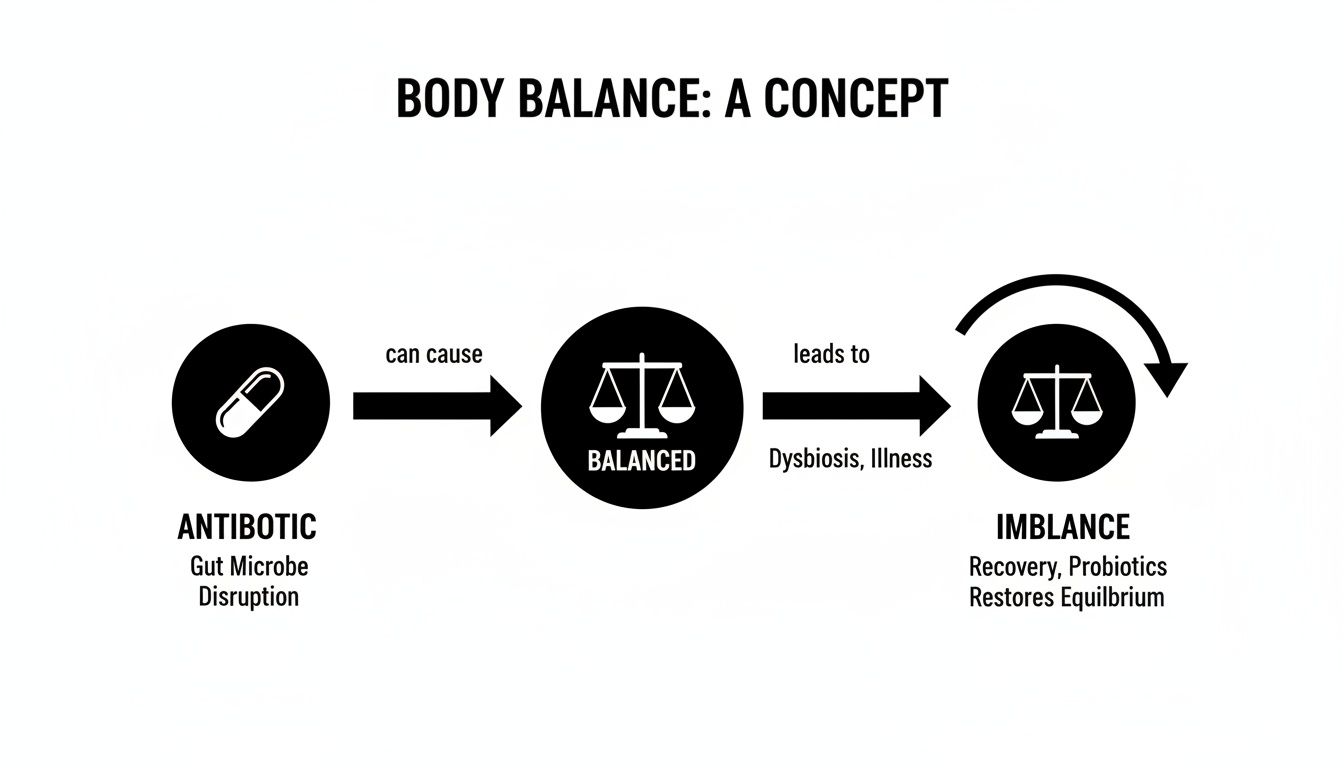
As you can see, the antibiotic is the trigger that throws this delicate ecosystem completely off-kilter, paving the way for yeast to take over.
A yeast infection that pops up after antibiotic use is a perfect example of what a secondary infection is—an infection that follows a primary one, often because the initial treatment weakened your body's defenses. It's not a sign the antibiotic failed; it's just an unfortunate consequence of its powerful, broad-acting nature.
Not All Antibiotics Carry The Same Risk
While any antibiotic has the potential to cause a yeast infection, the biggest culprits are broad-spectrum antibiotics. These are the heavy hitters designed to target a wide variety of bacteria, which makes them much more likely to disrupt your natural flora.
Vulvovaginal candidiasis (VVC), the clinical term for a yeast infection, is incredibly common, affecting up to 75% of women at least once. Understanding which medications raise your risk can be empowering.
Research has shown a clear link between specific antibiotics and a higher likelihood of yeast infections. Here's a quick look at how some common antibiotics stack up.
Antibiotic Risk For Yeast Infections: A Quick Look
The table below summarizes the relative risk of developing a yeast infection associated with common antibiotics, based on recent research.
| Antibiotic | Relative Risk Level | Key Takeaway |
|---|---|---|
| Tetracyclines (Doxycycline) | Moderate | Often used for acne and skin infections; can disrupt flora but is less aggressive than some others. |
| Penicillins (Amoxicillin) | High | Very common broad-spectrum antibiotic; a frequent cause of secondary yeast infections. |
| Cephalosporins | High | Another class of broad-spectrum drugs that can significantly impact vaginal flora. |
| Azithromycin | High | Known to more than double the risk of a yeast infection. |
While this isn't an exhaustive list, it highlights that broad-spectrum drugs like penicillins and cephalosporins are well-known triggers. If you are prone to yeast infections, it’s always a good idea to discuss the specific antibiotic you're being prescribed with your doctor.
For a deeper dive into yeast infection symptoms and treatments, you can check out our complete guide: Yeast Infection: Causes, Symptoms, and Treatment.
Recognizing the Symptoms and Typical Timeline
It’s a huge relief to finally finish a course of antibiotics, but that relief can quickly sour if a new set of uncomfortable symptoms shows up. A yeast infection after antibiotics treatment usually has a distinct and recognizable profile, which helps you pinpoint what’s happening and act fast.
These symptoms are all caused by an explosion in the population of Candida, a fungus that’s normally kept in line by your body's good bacteria. With those helpful bacteria gone, the yeast multiplies like crazy, leading to inflammation and irritation. While everyone's experience is a bit different, the classic symptoms are hard to ignore.
Key Symptoms to Watch For
The most common signs of a post-antibiotic yeast infection are usually intense and focused in one area. They create a specific kind of discomfort that really sets them apart from other issues.
Keep an eye out for a combination of these classic indicators:
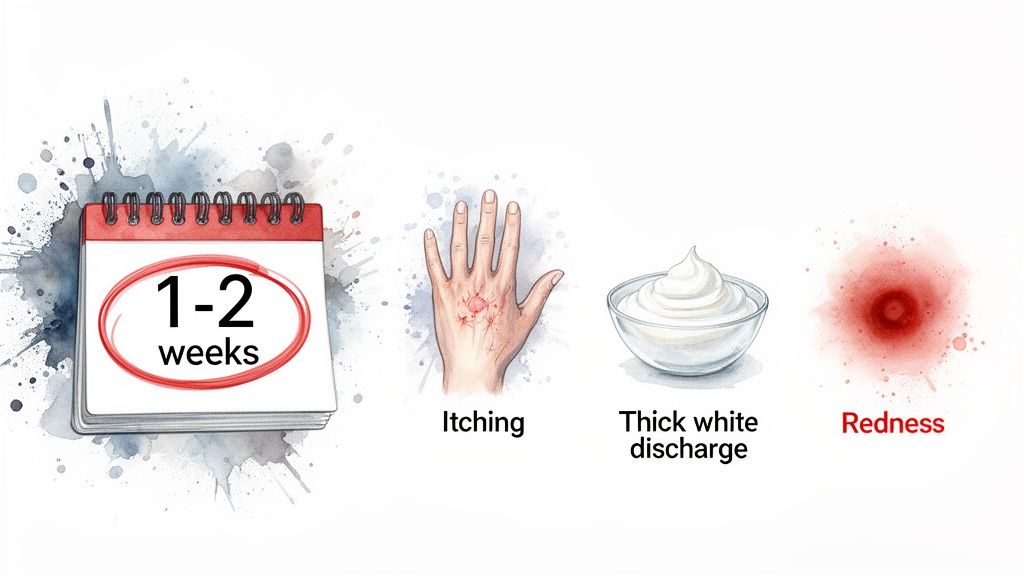
- Intense Itching and Irritation: This is often the most prominent and maddening symptom. It affects the vagina and the vulva and can range from a minor annoyance to something that feels unbearable.
- Thick, White Discharge: A dead giveaway is a discharge that’s thick, white, and clumpy. It’s often described as having a cottage-cheese-like consistency and is usually odorless.
- Redness, Swelling, and Soreness: The vaginal opening and surrounding skin can look visibly red, swollen, and feel sore to the touch.
- Burning Sensation: You might feel a burning or stinging sensation, especially when you urinate or during sex. This happens because the skin is already so inflamed and sensitive.
It's important to know that you might not experience all of these at once. However, that combination of intense itching plus the signature thick, white discharge is a very strong signal that you're dealing with a yeast infection.
Understanding the Typical Timeline
The timing of a yeast infection after taking antibiotics is often very predictable. Symptoms don't just pop up overnight; they tend to emerge within a specific window as the yeast starts to take over the territory left vacant by the good bacteria.
Most often, symptoms will start to appear either during the last few days of your antibiotic course or, more commonly, within one to two weeks after you’ve finished the medication. This period is the prime opportunity for Candida to multiply without any competition.
Research backs this up. A large study found that the risk of getting a yeast infection shoots up dramatically in the second week after starting antibiotics. The relative risk soared to 10.70 in week two and was still significantly high in the first and third weeks. This data really highlights how disrupting your vaginal flora creates the perfect storm for yeast overgrowth. You can discover more about this research on the antibiotic-yeast infection timeline.
Recognizing that your symptoms popped up within this one-to-two-week window is a powerful clue. It helps connect the dots between the cause (the antibiotics) and the effect (the infection), giving you more confidence to seek the right yeast infection after antibiotics treatment.
Your Guide to Effective Treatment Options
Once you’ve spotted the tell-tale signs of a yeast infection, the next step is finding the right treatment to get things back in balance and, most importantly, find relief. The good news is that a yeast infection after antibiotics treatment is incredibly manageable, with a few solid options available.
Your treatment journey can go one of two ways: you can start with an over-the-counter (OTC) remedy from the pharmacy or get a prescription from a healthcare provider. The best path for you really depends on your symptoms, your health history, and what you’re most comfortable with.
Over-The-Counter Antifungal Treatments
For a lot of people, the pharmacy aisle is the first stop. OTC treatments are a great choice for uncomplicated yeast infections because they’re convenient and you can grab one right away. These products mostly rely on antifungal agents from the "azole" family, like miconazole (the active ingredient in Monistat) and clotrimazole (found in Lotrimin).
These medications get to work by directly attacking the Candida fungus, breaking down its cell walls to stop it from growing. They come in a couple of different forms, so you can pick what works for you.
You’ll usually find them as:
- Vaginal Creams: You apply these inside the vagina with an applicator. They can also be used on the vulva to help soothe that external itching.
- Vaginal Suppositories: These are small, solid inserts that you place inside the vagina. They dissolve on their own and release the medication right where it's needed.
Now, this is where it can get a little confusing. You'll see 1-day, 3-day, and 7-day options on the shelf. While a 1-day treatment sounds like a quick fix, it packs a much higher, more concentrated dose of medication, which can sometimes cause more initial burning or irritation.
The 7-day treatments use a lower, gentler dose spread out over a week and are often recommended for more moderate infections. A 3-day course is a happy medium. If you complete the full course as directed, all of them are considered equally effective.
Prescription Medications For Yeast Infections
While OTC options are a solid starting point, they aren't always the perfect solution for everyone. Sometimes, a prescription-strength yeast infection after antibiotics treatment is the more effective—and more convenient—way to go. A doctor might recommend a prescription if your infection is severe, if OTC products just aren't cutting it, or if you get yeast infections over and over again.
The most common prescription is an oral antifungal pill called fluconazole, which you might know by its brand name, Diflucan.
The biggest win for fluconazole is its simplicity. It's usually just a single-dose pill you take by mouth, which completely skips the mess and hassle of creams or suppositories. The medication works from the inside out, traveling through your bloodstream to fight the fungal overgrowth everywhere.
For more complicated or recurrent infections, a doctor might prescribe a multi-dose course of fluconazole or even a stronger prescription-strength topical cream. Getting the right diagnosis first is absolutely key, since the symptoms of a yeast infection can sometimes mimic other conditions like bacterial vaginosis (BV). Using the wrong treatment will only delay your relief.
If you’re not sure about your symptoms or just prefer the ease of an oral pill, getting an online prescription is a fast and simple way to connect with a doctor. They can diagnose your condition and send the right treatment straight to your pharmacy.
Choosing Your Treatment OTC vs Prescription Options
Trying to decide between an over-the-counter remedy and a prescription can feel a little tricky. Both are effective, but they’re designed for different situations. This table breaks down the two paths to help you figure out what makes the most sense for you right now.
| Feature | OTC Antifungals (Creams/Suppositories) | Prescription Antifungals (Oral/Topical) |
|---|---|---|
| Active Ingredient | Miconazole, clotrimazole | Fluconazole, terconazole |
| Application | Topical (creams, suppositories) | Oral (pill) or stronger topical creams |
| Convenience | Available immediately at drugstores | Requires a doctor's consultation |
| Best For | Mild to moderate, infrequent infections | Severe, recurrent, or stubborn infections |
| Treatment Style | Hands-on, can be messy | Simple, single-dose oral option is mess-free |
| Effectiveness | High for uncomplicated infections | High for all types, including complex cases |
At the end of the day, whether you choose a 7-day cream or a single-dose pill, the goal is the same: to knock out the fungal overgrowth and get your body’s natural harmony back on track.
When to See a Doctor for Your Symptoms
While grabbing an over-the-counter remedy is a tempting first move for a yeast infection after antibiotics treatment, it’s not always the right one. Self-treating can sometimes backfire, delaying the proper care you need, especially if your situation is more complicated than you think. Knowing when to put down the OTC cream and call a doctor is the key to getting real, lasting relief.
It's all too easy to misdiagnose yourself. If you get it wrong, you could end up using a treatment that does absolutely nothing—or worse, makes the irritation even more intense. A doctor can confirm whether it's really a yeast infection or another common issue like bacterial vaginosis (BV), which needs a completely different treatment plan.
Key Signs It's Time for Professional Advice
If any of the following situations sound familiar, it's time to get a professional opinion. These are clear signs that you might need a prescription-strength solution or a closer look to rule out other problems.
This Is Your First Yeast Infection: If you've never had one before, you can't be 100% sure that's what's going on. Getting an official diagnosis the first time around is smart. It sets a baseline and makes sure you’re tackling the right problem from day one.
Over-The-Counter Treatments Fail: You followed the directions on the box perfectly, but the itching and burning are still hanging around. If your symptoms don't get better—or they come right back after you finish the treatment—it could mean you're dealing with a tougher, more resistant strain of yeast. Or, it might not be a yeast infection at all.
You Have Frequent Infections: Are you dealing with this more than a few times a year? If you get four or more yeast infections in 12 months, it's called recurrent vulvovaginal candidiasis (RVVC). This isn't something you can solve with OTC kits; it often requires a longer, more strategic treatment plan from a doctor to finally break the cycle.
Your Symptoms Are Severe: Mild itching is annoying. Intense symptoms are a red flag. If you’re experiencing severe redness and swelling that causes cracks or sores, or if you're in significant pain, you need to see a doctor right away.
You Have Additional Symptoms: A typical yeast infection is a local issue. It shouldn't make you feel sick all over. If you also have a fever, chills, nausea, or pain in your abdomen, it could signal a different or more serious infection that needs immediate medical attention.
The Modern Solution: Telehealth for a Fast Diagnosis
In the past, getting a diagnosis meant booking an appointment, taking time off work, and sitting in a waiting room. Thankfully, those days are fading. Telehealth services have completely changed the game, offering a faster, more private, and incredibly effective way to handle common issues like yeast infections.
This approach lets you connect with a board-certified physician straight from your phone or computer, often just by answering a few questions online. You can describe what you're feeling and get a professional diagnosis and treatment plan without the hassle.
Modern platforms make getting care incredibly simple. For example, when you need quick and convenient medical advice, you can learn more about how online urgent care connects you directly with doctors who can help. They can assess your situation and, if it's appropriate, send a prescription straight to your local pharmacy, often within just a few hours.
This convenience empowers you to get the correct yeast infection after antibiotics treatment without the frustrating delays of an in-person visit. It ensures you get an accurate diagnosis from a real doctor, which is the most important step toward feeling better fast.
Proactive Strategies to Prevent Future Infections
Dealing with a yeast infection after antibiotics can feel like a totally unfair trade-off. While there's no foolproof way to guarantee you won't get one, you can take several proactive steps to support your body's natural defenses and seriously lower your risk the next time you need antibiotics.
The goal is pretty straightforward: reinforce your body's "good" bacteria and create an environment where yeast simply can't get a foothold. Think of it like tending to your internal garden—you want to give the protective plants a boost so the weeds have nowhere to sprout. This means a smart mix of dietary support and lifestyle habits.
Fortify Your Microbiome from the Inside Out
One of the most powerful things you can do is replenish the beneficial bacteria that antibiotics unfortunately wipe out. The best way to do that is by focusing on probiotics, which are live microorganisms that give your health a major boost.
Introducing these friendly microbes helps bring your gut and vaginal flora back into balance.
- Eat Probiotic-Rich Foods: Start adding foods like yogurt (look for "live and active cultures" on the label), kefir, sauerkraut, and kimchi to your diet. These are fantastic natural sources of good bacteria, especially Lactobacillus strains, which are the superstars for maintaining an acidic, yeast-unfriendly vaginal environment.
- Consider a Probiotic Supplement: For a more concentrated dose, a daily probiotic supplement can be a game-changer. Look for products that specifically list Lactobacillus rhamnosus and Lactobacillus reuteri, as studies have shown these strains are particularly great for supporting vaginal health.
It's hard to overstate just how strong the link between antibiotics and yeast infections is. Research has confirmed that recent antibiotic use nearly doubles the risk. One study of over 1500 women found that 19.3% of those with a yeast infection had taken antibiotics in the past month, compared to just 11.9% of the women without an infection. The risk also climbed with longer antibiotic courses, which really drives home why these preventative steps matter. You can read the full research on antibiotic use and yeast infection risk to see the data for yourself.
Adopt Smart Lifestyle Habits
Your daily routines can have a huge impact on your vaginal microbiome. Creating a healthy external environment helps support your internal balance, making it much harder for yeast to thrive.
The core principle is simple: keep the area cool, dry, and free from unnecessary irritants. Yeast loves warm, moist environments, so the goal is to eliminate those conditions.
Here are some easy habits that can make a massive difference:
- Choose Breathable Underwear: Ditch the synthetic fabrics like nylon or spandex and opt for cotton underwear. Cotton is way more breathable and wicks away moisture, preventing the warm, damp conditions that yeast loves.
- Avoid Harsh Products: Steer clear of scented soaps, feminine sprays, douches, and scented tampons or pads. These products can throw off the delicate pH balance of the vagina, washing away the protective bacteria you need and rolling out the red carpet for yeast.
- Change Out of Damp Clothing Promptly: Don't hang around in sweaty workout clothes or a wet swimsuit. Changing into dry clothes as soon as you can removes the moisture that encourages yeast to grow.
- Practice Gentle Hygiene: When you wash, just use warm water and maybe a mild, unscented soap on the external vulva. There's no need to clean inside the vagina—it has its own amazing self-cleaning system.
By combining these diet and lifestyle strategies, you can actively support your body’s defenses. This proactive approach helps maintain microbial harmony, empowering you to finish your next course of antibiotics without that dreaded, unwelcome side effect.
Common Questions About Antibiotics and Yeast Infections

Even after understanding the link between antibiotics and yeast infections, it's natural to have a few lingering questions. Let’s tackle some of the most common concerns so you can feel more confident and in control of your health.
Can I Take An Antifungal While Taking My Antibiotic?
Absolutely. In fact, this is a common and really effective strategy, especially if you know you’re prone to yeast infections. A doctor might prescribe a single-dose oral antifungal, like fluconazole, for you to take right when you start your antibiotic.
Think of it as giving your body's ecosystem some reinforcements before the Candida yeast gets a chance to take over. It’s a proactive step that helps maintain your natural balance while it’s under stress from the antibiotic.
Of course, this isn't a one-size-fits-all approach. It’s crucial to talk it over with a doctor. They’ll look at your medical history, how often you’ve had yeast infections before, and which antibiotic you’re taking to decide if it's the right move for you.
How Long Until a Yeast Infection Clears Up After Treatment?
How quickly you feel better really depends on the treatment, but relief often starts pretty fast. For most people, the worst of the itching and burning starts to fade within the first day or two.
Getting rid of the infection completely takes a little longer. Here's what you can generally expect:
- Over-the-Counter (OTC) Topical Treatments: With creams or suppositories, you should start feeling better in 1-3 days. The key is to finish the entire course—whether it’s for 1, 3, or 7 days—to make sure the infection is totally gone and won’t come right back.
- Single-Dose Oral Prescriptions: After taking a pill like fluconazole, symptoms usually start improving within 24 to 48 hours. It can take up to a week for the infection to fully resolve as the medication works its way through your system.
If your symptoms are still hanging around or getting worse after you've finished the full treatment, it’s time to check back in with a doctor.
Are Some People More Likely To Get These Infections?
Yes, definitely. Certain things can make you more vulnerable to getting a yeast infection after antibiotics treatment. Your own health profile plays a huge role in how your body handles the disruption.
You might be at higher risk if you have:
- A History of Recurrent Infections: If you already deal with yeast infections often (four or more a year), you’re more likely to get one after taking antibiotics.
- Uncontrolled Diabetes: High blood sugar levels create a perfect environment for yeast to thrive, making infections more common.
- A Weakened Immune System: Conditions or medications that suppress your immune system make it harder for your body to keep yeast growth in check.
- Pregnancy: The hormonal shifts during pregnancy can alter the vaginal microbiome, leaving you more susceptible to yeast overgrowth.
The type of antibiotic matters, too. Broad-spectrum antibiotics, which kill off a wide variety of bacteria, are far more disruptive to your body's natural flora and carry a higher risk. If you fall into any of these categories, talking to your doctor about prevention before you start an antibiotic is a very smart move.
What If It’s Not a Yeast Infection?
This is a critical question. It’s so easy to mistake other conditions for a yeast infection because the symptoms can overlap. Things like bacterial vaginosis (BV), certain sexually transmitted infections (STIs), or even simple skin irritation can all cause itching, discharge, or discomfort.
The problem is, the treatments are completely different. Using an OTC yeast infection cream for BV, for example, won’t do a thing and will only delay you from getting the right care. One of the key clues is often the discharge: BV typically causes a thin, grayish discharge with a fishy odor, while yeast infection discharge is usually thick, white, and odorless.
If you are not 100% sure what you’re dealing with—or if this is the first time you’ve had these symptoms—the safest and fastest way forward is to get a professional diagnosis.
Trying to figure out your symptoms and get the right treatment shouldn't be a struggle. At ChatWithDr, you can connect with a board-certified U.S. physician online, 24/7, without ever needing a video call. You can get a diagnosis and have a prescription sent to your pharmacy in as little as an hour. Start your consultation today at https://chatwithdr.com.