
Waking up with a "sticky" eye that is red, itchy, and irritated is a frustrating way to start the day. Pink eye, or conjunctivitis, is one of the most common eye conditions, affecting millions of Americans every year. While it is rarely a medical emergency, the discomfort and the highly contagious nature of certain types make quick treatment essential.
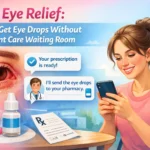
In the past, getting a prescription for pink eye meant calling your primary care doctor, waiting days for an opening, or spending hours in a crowded urgent care waiting room. Today, you can skip the wait and get a same day prescription online for pink eye through secure medical messaging.
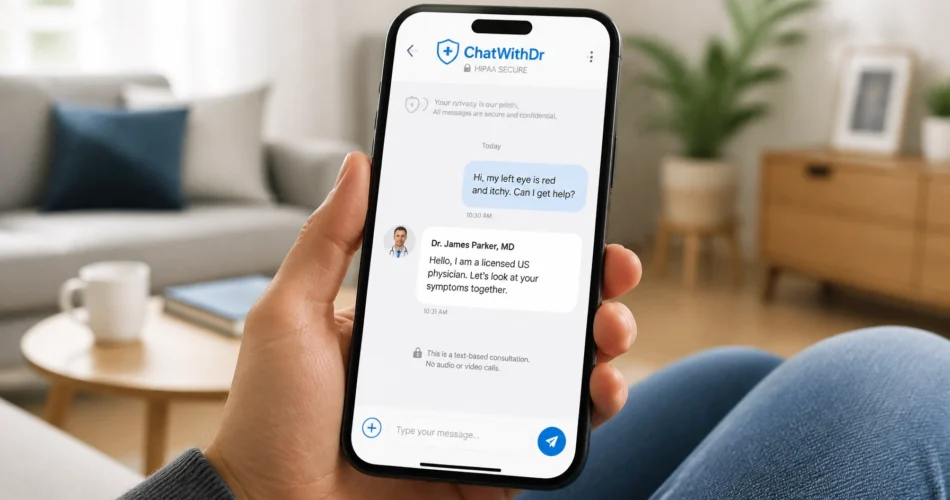
At ChatWithDr, we’ve streamlined the process. For a flat rate of $39.99, you can text with a licensed US doctor and receive a diagnosis and prescription: all without an appointment or video call. Here is your comprehensive guide to identifying pink eye and getting fast, professional care from home.
1. Understanding Pink Eye: Symptoms and Types
Pink eye is an inflammation or infection of the transparent membrane (conjunctiva) that lines your eyelid and covers the white part of your eyeball. When small blood vessels in the conjunctiva become inflamed, they're more visible, which is what causes the whites of your eyes to appear reddish or pink.
According to the Centers for Disease Control and Prevention (CDC), there are three primary types of pink eye, and identifying which one you have is the first step toward the right treatment:
- Bacterial Conjunctivitis: This type is caused by bacteria like Staphylococcus aureus or Streptococcus pneumoniae. It often features a thick, yellow-green discharge that can cause your eyelids to stick together, especially in the morning. Bacterial pink eye usually requires antibiotic eye drops.
- Viral Conjunctivitis: Often associated with the common cold, this type is highly contagious. It typically produces a watery discharge and may start in one eye before spreading to the other. Antibiotics do not work on viruses; instead, treatment focuses on symptom relief while the virus runs its course.
- Allergic Conjunctivitis: Triggered by allergens like pollen, pet dander, or dust mites, this type affects both eyes and is accompanied by intense itching, tearing, and sometimes sneezing or a runny nose.
Common Symptoms to Watch For:
- Redness in one or both eyes.
- Itchiness or a "gritty" feeling.
- A discharge that forms a crust during the night.
- Increased tearing or watery eyes.
- Sensitivity to light.

2. How to Get a Prescription Without a Doctor’s Visit
The traditional healthcare model is often too slow for conditions like pink eye. When your eye is burning and you’re worried about spreading the infection to your family or coworkers, you need answers immediately.
Telehealth has evolved beyond the clunky video calls of the past. Platforms like ChatWithDr offer secure medical messaging, allowing you to "text a doctor" your symptoms and even upload photos of your eye. This method is often preferred for eye infections because it allows the physician to zoom in on high-resolution images to check for specific signs of bacterial vs. viral infection.
The ChatWithDr Advantage:
- No Appointments Needed: You don't have to wait for an "opening." Our doctors are available 24/7, including holidays and weekends.
- No Account Required: You can start your consultation immediately without filling out lengthy registration forms or creating a permanent profile.
- Fast Turnaround: We provide a within 30 minutes to 4 hours average response time, ensuring you can get your medication and start feeling better on the same day.
To learn more about how our platform works, visit our How It Works page.
3. What to Expect During Your Online Consultation
If you've never used a text-based telehealth service, you might wonder how a doctor can diagnose you without seeing you in person. Licensed US physicians are trained to diagnose many urgent care conditions through a combination of clinical history and visual evidence.
When you start a session for pink eye treatment online, the process follows these simple steps:
- Describe Your Symptoms: You’ll be asked when the redness started, if there is discharge, and if you have any pain or vision changes.
- Upload Photos: A clear, well-lit photo of the affected eye(s) is often the most important tool for a doctor.
- Review Medical History: The doctor will check for allergies to medications and any underlying conditions (like contact lens use) that might affect your treatment.
- Diagnosis & Treatment Plan: A licensed physician will review your information. If they determine you have bacterial conjunctivitis, they will send an e-prescription for antibiotic eye drops directly to your local pharmacy.

4. Treatment Options: Antibiotics vs. Home Care
Not every case of pink eye requires a prescription. However, getting a professional opinion is vital to avoid complications.
Prescription Medications
If your infection is bacterial, a doctor may prescribe:
- Erythromycin Ointment: Often used for children as it is easier to apply and stays on the eye longer.
- Ofloxacin or Polytrim Drops: Common antibiotic drops that clear the infection within a few days.
- Antihistamine Drops: For allergic cases, prescription-strength drops like Pataday or Pazeo may be recommended if over-the-counter options fail.
Supportive Care at Home
Regardless of the type of pink eye, the following tips from The Mayo Clinic can help manage symptoms:
- Apply Compresses: Use a clean, lint-free cloth soaked in cool or warm water. Apply it to your closed eyelids for several minutes a few times a day.
- Use Artificial Tears: Over-the-counter lubricating eye drops can help soothe the "gritty" feeling.
- Stop Wearing Contacts: If you wear contact lenses, switch to glasses immediately. Throw away your current lenses and case, and do not wear new ones until your doctor says it is safe.
5. Prevention: Keeping the Infection from Spreading
Pink eye: especially the viral and bacterial varieties: is notoriously contagious. To protect those around you, follow these hygiene protocols:
- Don't Touch Your Eyes: This is the fastest way to spread the infection from one eye to the other or to other people.
- Wash Your Hands Often: Use soap and water frequently throughout the day.
- Change Linens Daily: Use a fresh towel and washcloth every day. Change your pillowcase every night while the infection is active.
- Discard Eye Makeup: If you used mascara or eyeliner while infected, throw it away. Do not share eye makeup with others.
If you are a student or a busy professional, getting back to your routine is a priority. Many schools and workplaces require a doctor's note or 24 hours of antibiotic treatment before you can return. By using a 24/7 online doctor, you can get your treatment started immediately, minimizing your time away from work or class.

Conclusion: Quality Care at Your Fingertips
Getting a same day prescription for pink eye shouldn't be a day-long ordeal. With ChatWithDr, you get access to licensed US physicians who can diagnose and treat your condition through secure, text-based messaging for a transparent flat rate of $39.99. Whether you're dealing with sinus infections, yeast infections, or pink eye, we are here to help 24/7.
Download the ChatWithDr app today to get started:
- iOS: https://apps.apple.com/us/app/chatwithdr-online-doctor-24-7/id6758861710
- Android: https://play.google.com/store/apps/details?id=com.chatwithdr.app
Disclaimer: This information is not a substitute for professional medical advice, diagnosis, or treatment. Always seek the advice of your physician or qualified health provider with questions regarding medical conditions or treatments.
Related posts:
 Your Guide to Fast Pink Eye Treatment Online
  Pink Eye Treatment Online: How to Get Antibiotic Eye Drops Today
  Pink Eye Treatment Online: How to Get Antibiotic Eye Drops Today
  How to Get Treatment for Pink Eye Online: Fast & Professional Care
  Pink Eye Relief: How to Get Eye Drops Without the Urgent Care Waiting Room